A toilet that bubbles, burps or makes a hollow glugging sound is usually trying to tell you something about the drainage system. If you are asking, why is my toilet gurgling, the most likely explanation is that air cannot move through the pipework as it should. That can be caused by a developing toilet blockage, a problem further along the drain, or a blocked vent pipe.
A single brief gurgle after flushing may not be an emergency. Repeated noises, slow flushing, rising water or foul smells need quicker attention. Left alone, the restriction can worsen and may lead to a toilet backing up, wastewater appearing in a bath or shower, or an external drain overflowing.
Why is my toilet gurgling when it flushes?
Every flush sends water and waste through the soil pipe and into the underground drainage system. As that water moves, air needs somewhere to go. A properly working vent allows pressure to equalise, so the toilet can empty smoothly without pulling or pushing air through the pan.
When there is a blockage or restricted section in the system, air can become trapped. The pressure then looks for an escape route, often through the toilet water. That is the gurgling you hear. The sound itself is not the fault. It is a useful symptom that points to an airflow or drainage problem.
The location and timing can offer clues. Gurgling only when the toilet is flushed may indicate a partial blockage close to the toilet. If the toilet bubbles when you run a tap, empty a bath or use a washing machine, the issue may be in a shared branch pipe or the external drain. In a flat, it can sometimes involve pipework serving more than one property, so it is sensible to report it promptly to the landlord, managing agent or building manager where relevant.
Common causes of a gurgling toilet
A partial blockage in the toilet trap or pipework
The toilet trap is the curved part of the pan that holds water and stops sewer odours entering the room. Toilet paper, wipes, sanitary products, excess paper, small objects or a build-up of waste can restrict it without stopping the toilet completely. Water may still go down, but more slowly and noisily than usual.
This is one of the more common causes where the toilet is the only affected fitting. A partial blockage can become a full blockage with the next few flushes, particularly if more paper is added to the system.
A blocked external drain or sewer connection
If several fixtures are slow, noisy or backing up, the problem is likely beyond the toilet. External drains can become obstructed by fats, wipes, scale, leaves, silt, damaged pipework or root intrusion. In older properties, defects such as displaced joints or cracked drains can also catch debris repeatedly.
A blocked external drain may cause gurgling before you see an obvious overflow. Check only from a safe distance if a drain cover is already accessible. Do not lift heavy or damaged manhole covers, and do not put your hands into wastewater. Signs such as standing water, sewage smells or overflowing gullies mean professional drain clearance is needed without delay.
A blocked or faulty vent pipe
Many drainage systems have a soil vent pipe that runs upwards, often through the roof. Its job is to let air move through the drainage system and maintain the right pressure. Debris, nesting materials, leaves, frost or a fault in the vent can prevent that airflow.
A vent issue can produce gurgling even when there is no obvious local blockage. As these pipes are commonly at roof level, this is not a safe DIY inspection. A drainage professional can assess the system and identify whether poor venting is contributing to the problem.
A problem in shared drainage
Terraced homes, converted buildings and blocks of flats may have shared sections of drainage. A restriction downstream can affect more than one toilet, sink or bath. You may notice the problem when a neighbour uses water, or another fitting in your property may make noises you cannot explain.
If you rent, let the landlord or agent know as soon as possible. For commercial premises, early reporting is particularly useful because a developing drainage blockage can quickly disrupt staff facilities, customers and normal operations.
What you can safely check first
Start by looking at the toilet bowl. Is the water level higher or lower than normal? Does the water rise after flushing before slowly falling away? Is the flush weaker than usual? These observations will help identify whether the restriction is likely close to the pan or further down the line.
Next, use a basin tap or run a small amount of water into the bath and listen. If this causes toilet bubbling, stop using large volumes of water. Avoid running the washing machine, dishwasher or a full bath until the cause is clear, as extra water may have nowhere to drain safely.
If the toilet is not overflowing and you believe the obstruction is in the pan, a toilet plunger may help. Use one designed to form a seal around the toilet outlet, apply steady pressure, and stop immediately if the bowl starts to fill. A plunger will not fix a blockage in an external drain, structural damage or a vent problem.
Do not flush wipes, even those described as flushable, and do not use chemical drain cleaners in the toilet. Strong chemicals can splash back, damage some pipework or create hazards for anyone who later needs to clear the blockage. Do not keep flushing in the hope that the sound will disappear. This can turn a manageable blockage into an indoor overflow.
When a gurgling toilet needs urgent help
Arrange professional drainage assistance promptly if the toilet is overflowing, wastewater is entering the bath or shower, or you can smell sewage indoors. The same applies if an external drain is backing up or multiple fixtures are affected. These symptoms suggest the restriction may be further into the drainage system and needs the right equipment to clear safely.
It is also worth arranging an inspection where the toilet gurgles repeatedly but does not yet block. Recurring noises are often an early warning that debris is building up or that there is an underlying defect. Clearing the immediate obstruction may solve the issue, but repeated blockages may need a closer investigation rather than the same short-term fix each time.
For properties across Greater London and nearby areas, RF Drainage Experts can investigate toilet, internal and external drain problems using professional clearance equipment. Where the cause is unclear or recurring, CCTV drain inspection can show whether roots, a crack, a collapse, a displaced joint or another fault is affecting the pipework. This helps target the repair or maintenance work to the real problem.
What a professional drainage visit may involve
The first step is usually to establish which fixtures are affected and whether there are signs of a local or external blockage. A drainage technician may clear accessible obstructions using suitable equipment, then test the system to check that water is flowing normally again.
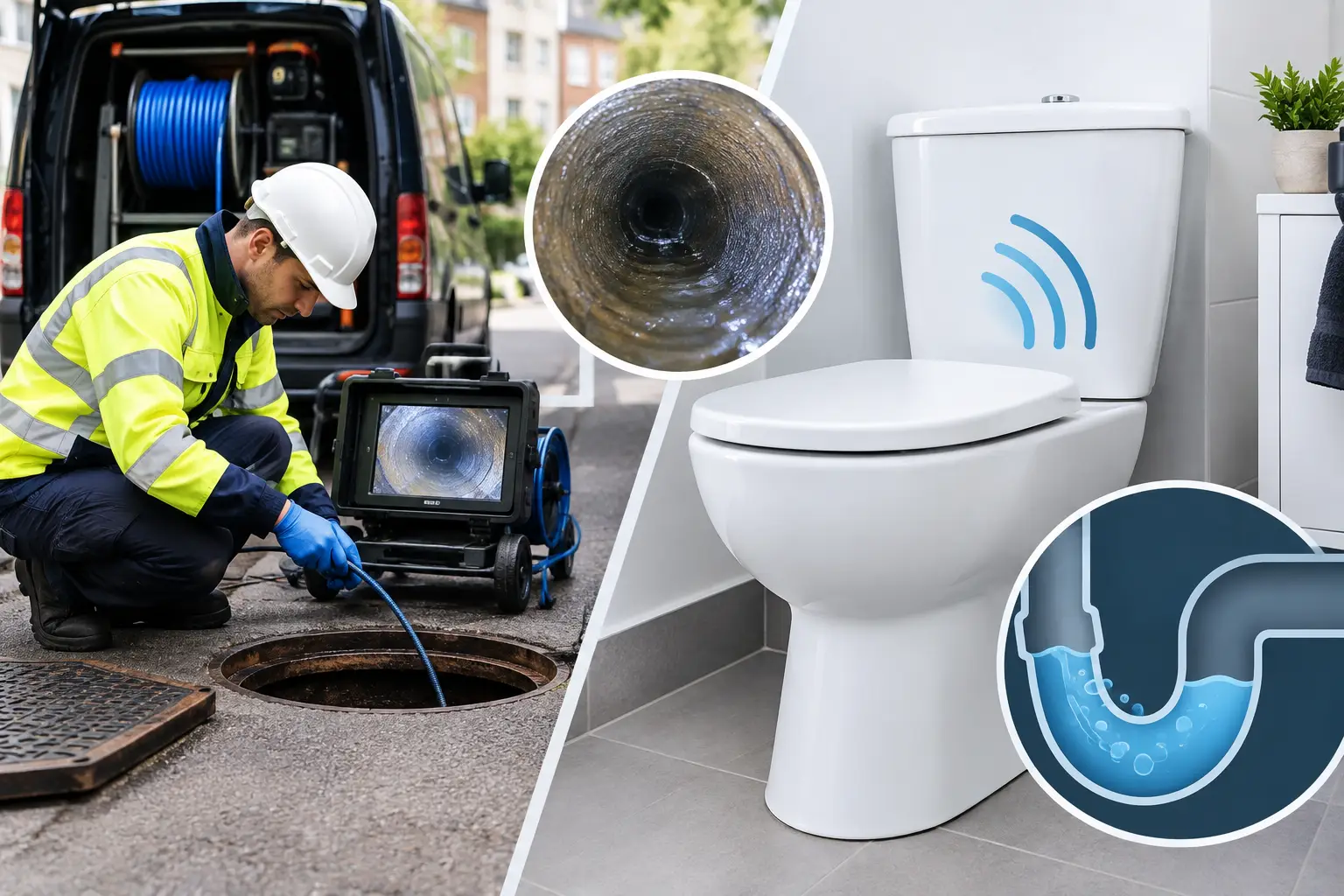
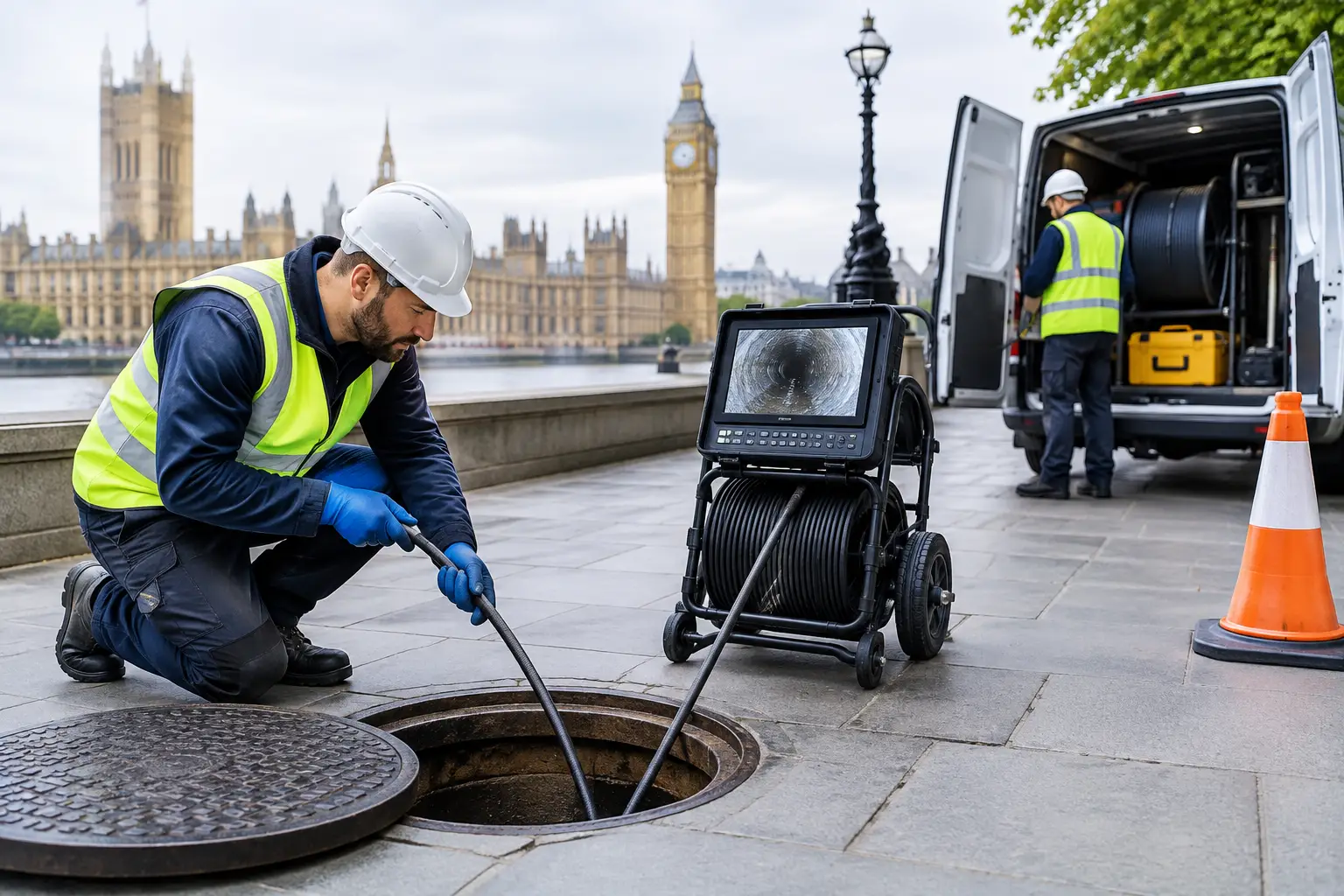
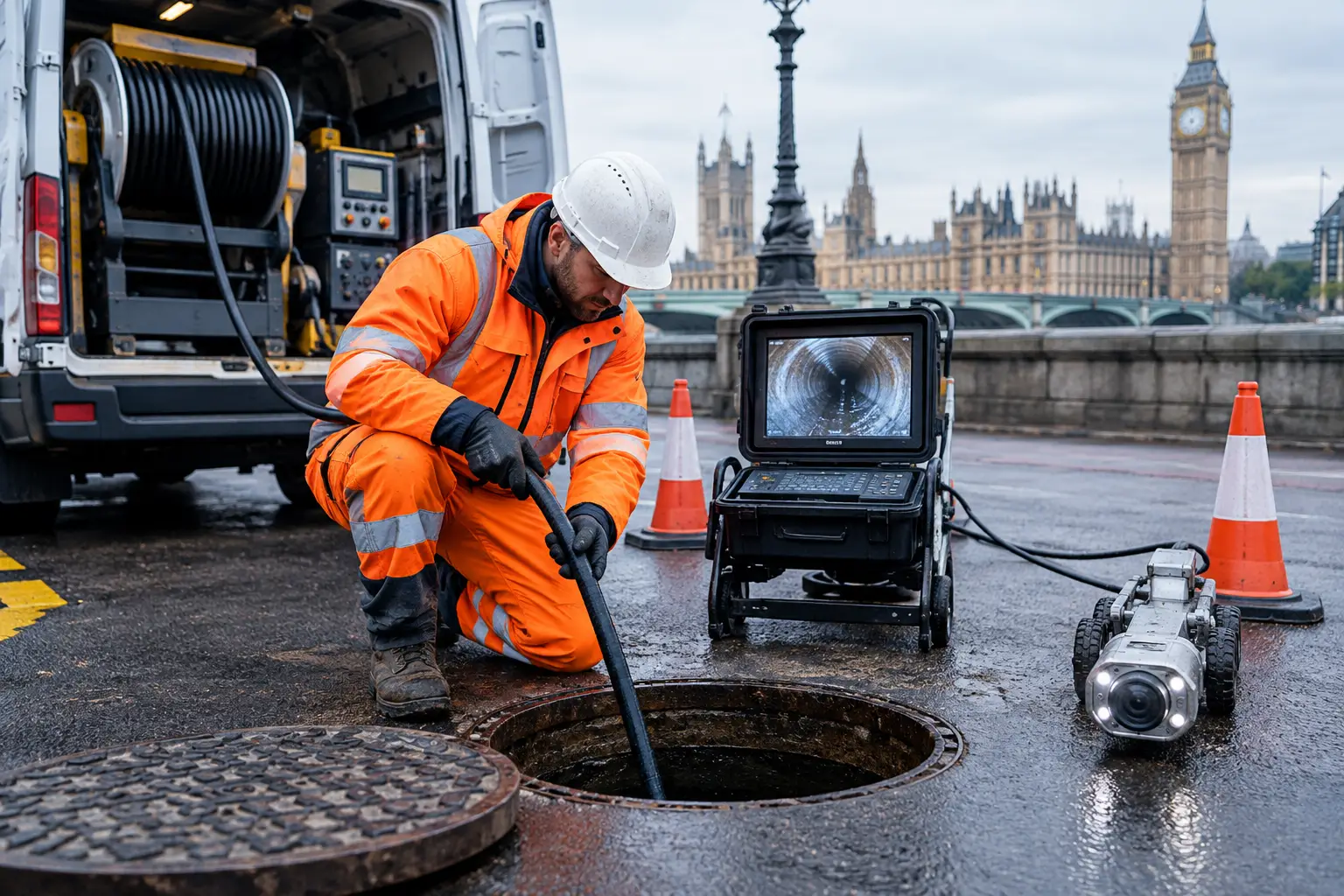
Where symptoms point to an underground issue, a CCTV camera survey can inspect the inside of the drain without unnecessary excavation. It can reveal stubborn build-up, root ingress and structural faults that cannot be seen from the surface. The right solution depends on what the inspection finds. Sometimes thorough drain cleaning is enough; in other cases, a damaged section needs repair to prevent the problem returning.
Can I keep using a gurgling toilet?
It depends on the symptoms. If the toilet flushes normally, there is no water rise, and the noise happened once, monitor it closely and avoid flushing unsuitable items. If it gurgles on every flush, drains slowly or reacts when other appliances discharge water, reduce water use and arrange an assessment.
Do not continue using it if the bowl is filling unusually high, water is coming up elsewhere, or there is any sewage overflow. Keep people and pets away from contaminated water, ventilate the area if possible, and avoid trying to clear a serious backup yourself.
A gurgling toilet rarely becomes quieter by itself. Acting while it is still a noise rather than an overflow is usually the cleaner, less disruptive way to protect your home or premises.