A toilet that will not flush, dirty water rising through a shower tray, or a gully overflowing outside is more than an inconvenience. Sewer backups can contaminate your property, damage floors and furnishings, and quickly make a home or business unsafe to use. Acting early helps limit the mess and gives a drainage professional the best chance of resolving the cause before the problem worsens.
For properties across Greater London, the right response depends on where the wastewater is appearing, whether the issue affects one fitting or several, and whether flooding is still active. The priority is always to protect people, stop further water entering the system and arrange a proper investigation.
What to do immediately during sewer backups
First, stop using water wherever possible. Do not flush toilets, run taps, use the washing machine or dishwasher, or empty sinks and baths. Every litre sent into a blocked drainage pipe may have nowhere to go except back through the lowest outlet in the property.
Keep children, pets and anyone not dealing with the issue away from affected areas. Wastewater can carry bacteria and other contaminants, so avoid touching it with bare hands. If you need to move through the area, wear suitable footwear and avoid spreading water to clean parts of the building.
If water is close to electrical sockets, appliances or wiring, do not enter the area until it is safe to do so. Turn off electricity only if you can reach the consumer unit without going near standing water. Do not attempt to clear an outside manhole, inspection chamber or drain yourself. Covers can be heavy, gases may be present, and the blockage may be deeper in the line than it appears.
Take a few photographs from a safe distance if you can. They can help show where the overflow started and may be useful for landlords, managing agents or insurers. Then arrange emergency drain clearance. A professional can assess the blockage, clear it with the appropriate equipment and check whether the pipe has been damaged.
Signs the problem is in the main drain
A single slow basin does not always mean a sewer problem. It may be a local blockage in the trap or waste pipe. Sewer backups are more likely when several fixtures are affected at once, particularly if the lowest fixtures are the first to overflow.
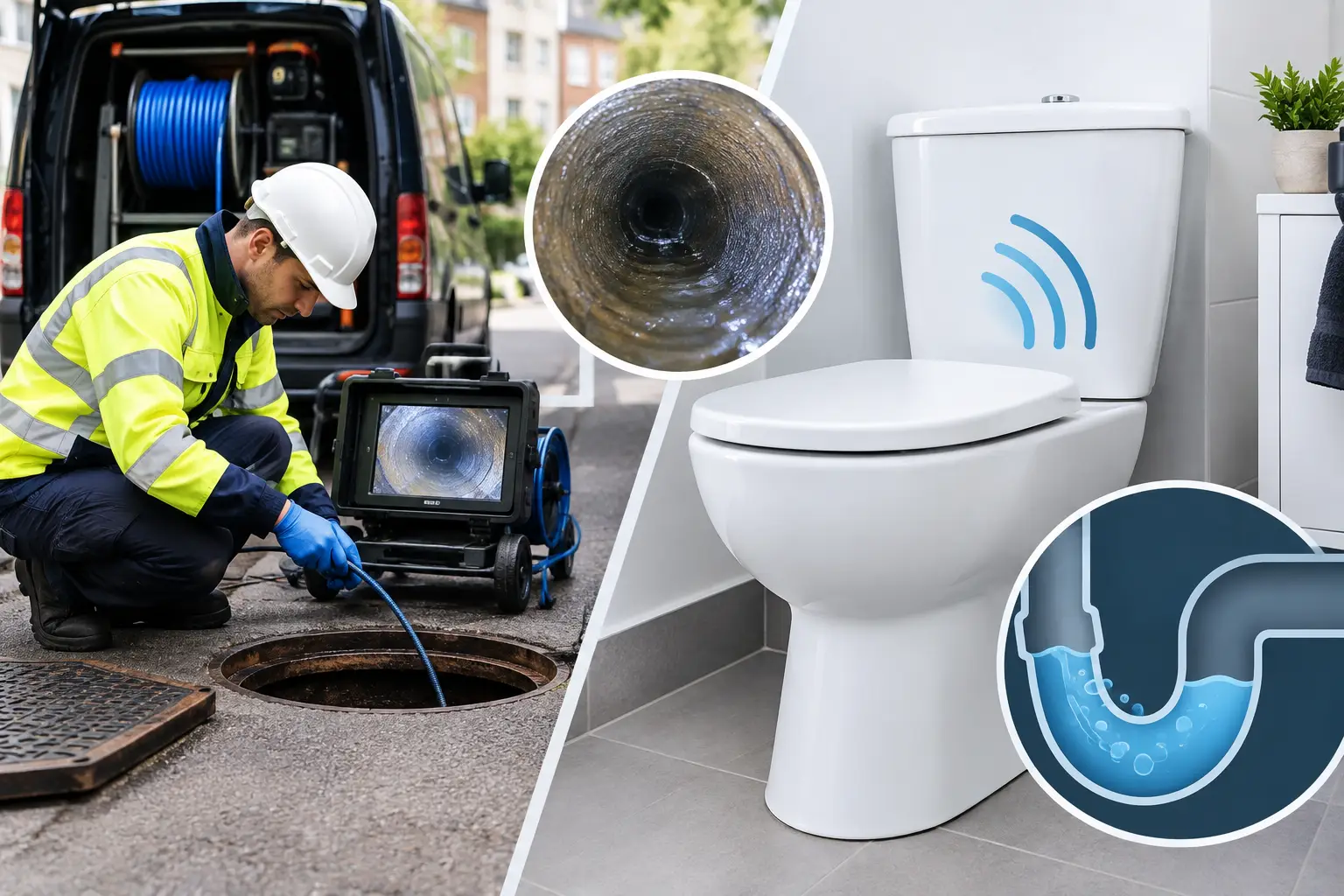
For example, flushing an upstairs toilet may cause water to rise in a ground-floor shower or bath. A kitchen sink, toilet and external gully may all drain slowly at the same time. You might also notice gurgling sounds, persistent foul odours, bubbling water in the toilet bowl, or wastewater around a manhole cover.
These signs often point to a blockage in the main drain serving the property. In a commercial setting, a backup may affect staff toilets, customer facilities, kitchens or floor drainage, making rapid action particularly important. Closing off the affected area and reducing water use can prevent a manageable blockage becoming a disruptive flood.
Common causes of sewer backups
The cause is not always visible from above ground. A drain may be blocked by a build-up of unsuitable materials, or the pipe itself may have deteriorated over time. Clearing the immediate obstruction is essential, but recurring backups need investigation so the underlying fault is not missed.
Fat, wipes and household waste
Cooking fat, oil and grease can cool and harden inside kitchen drainage pipes. Food debris then sticks to the build-up and gradually restricts the flow. Wet wipes, sanitary products, cotton buds, nappies and paper towels are also frequent causes of blockages. Even products labelled as flushable can catch in joints, bends or rough sections of pipe.
Only toilet paper and human waste should be flushed. In kitchens, allow oils and fats to cool in a container before disposing of them in the bin, rather than pouring them down the sink.
Roots entering damaged pipes
Tree and shrub roots naturally seek moisture. If a drain has a small crack, loose joint or opening, fine roots can enter and grow inside it. They trap debris and reduce the pipe’s internal space, causing repeated slow drainage and eventual backups.
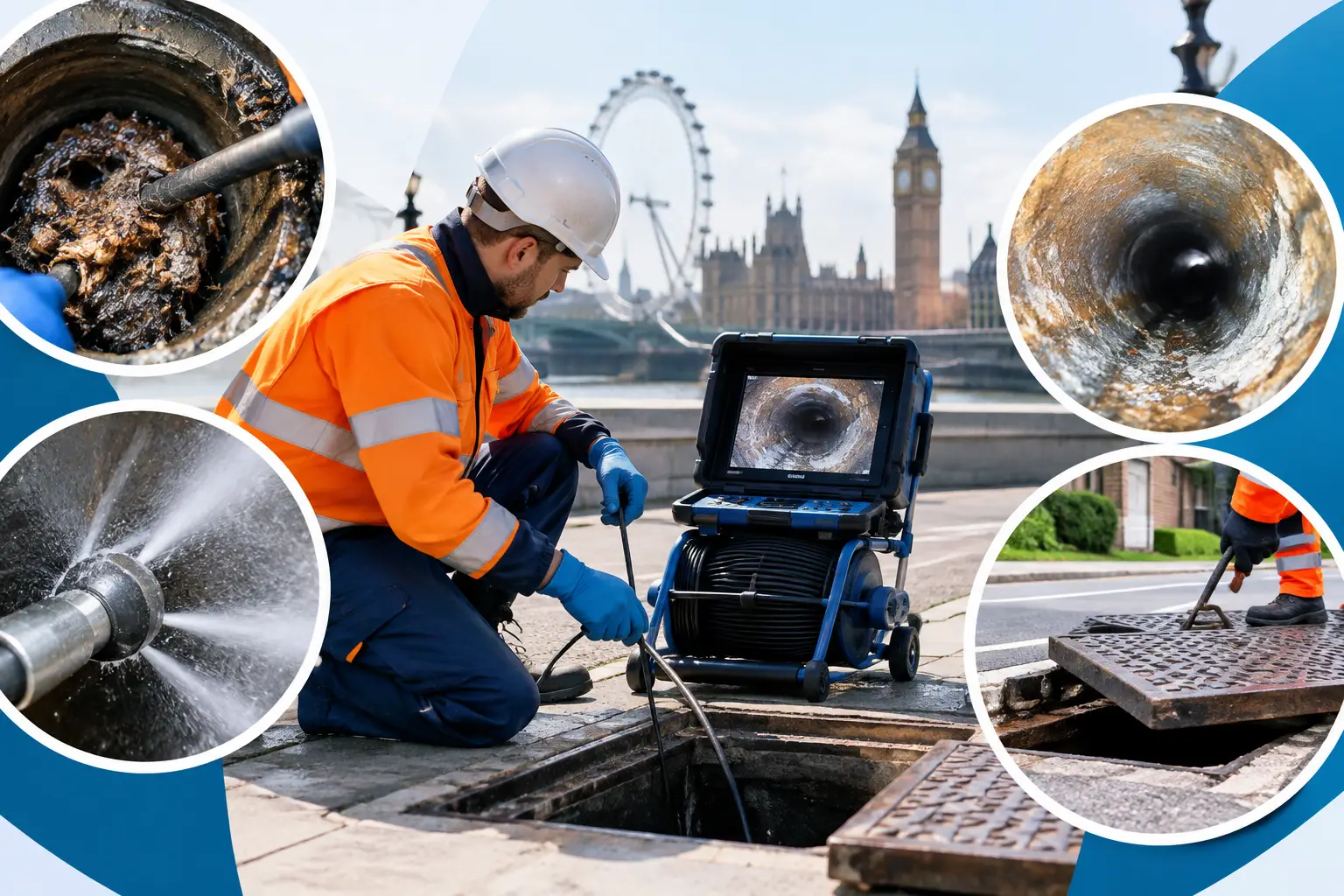
Root cutting can remove the immediate obstruction, but a CCTV drain inspection may be needed to see whether the pipe has cracks or displaced joints that require repair. Without addressing the entry point, roots are likely to return.
Cracks, collapses and poor pipe alignment
Older pipework can crack, sink or become displaced due to ground movement, age or previous building work. A damaged section may catch paper and waste, while a collapsed pipe can prevent water passing through at all. These faults are unlikely to be solved permanently by plunging or chemical drain cleaners.
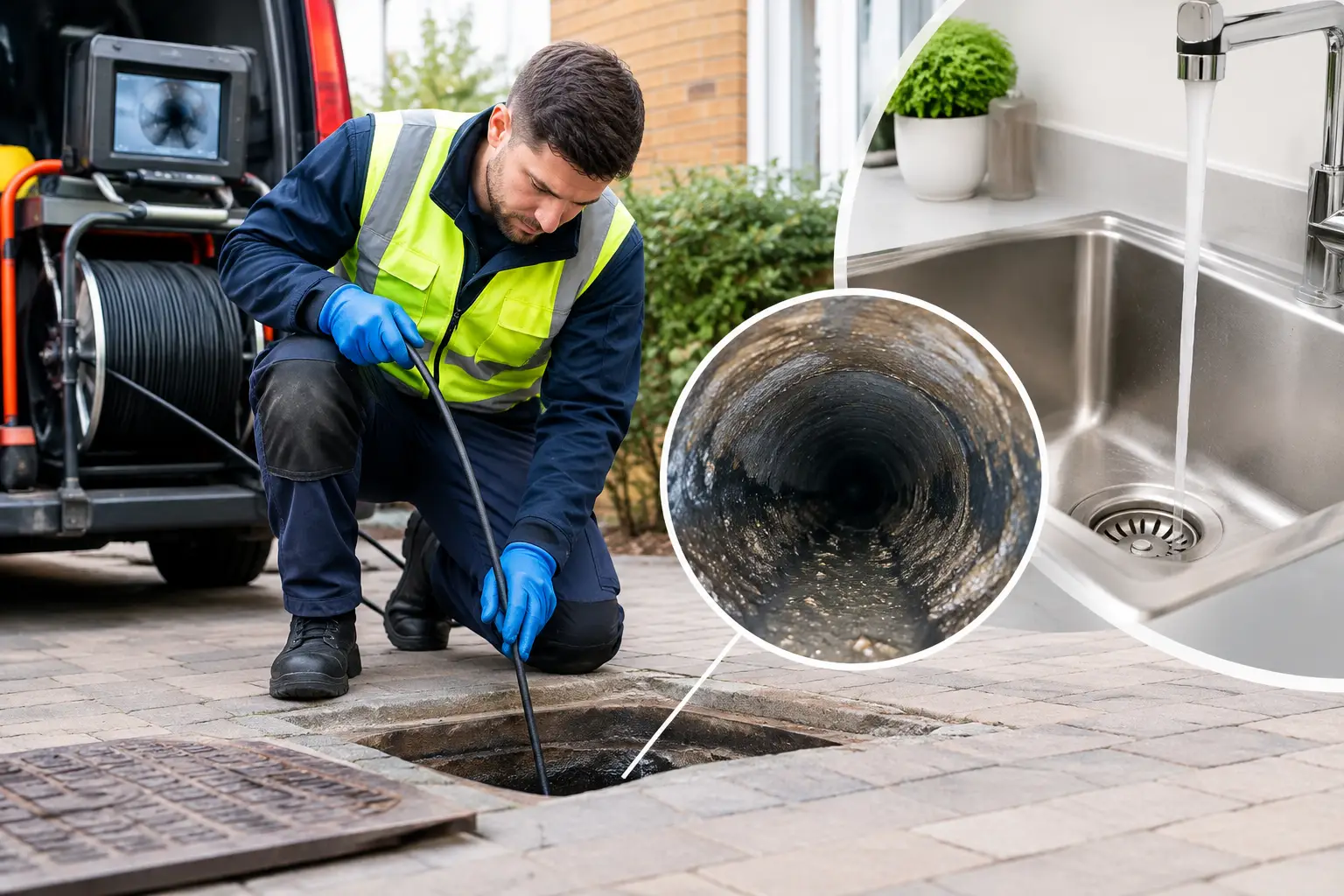
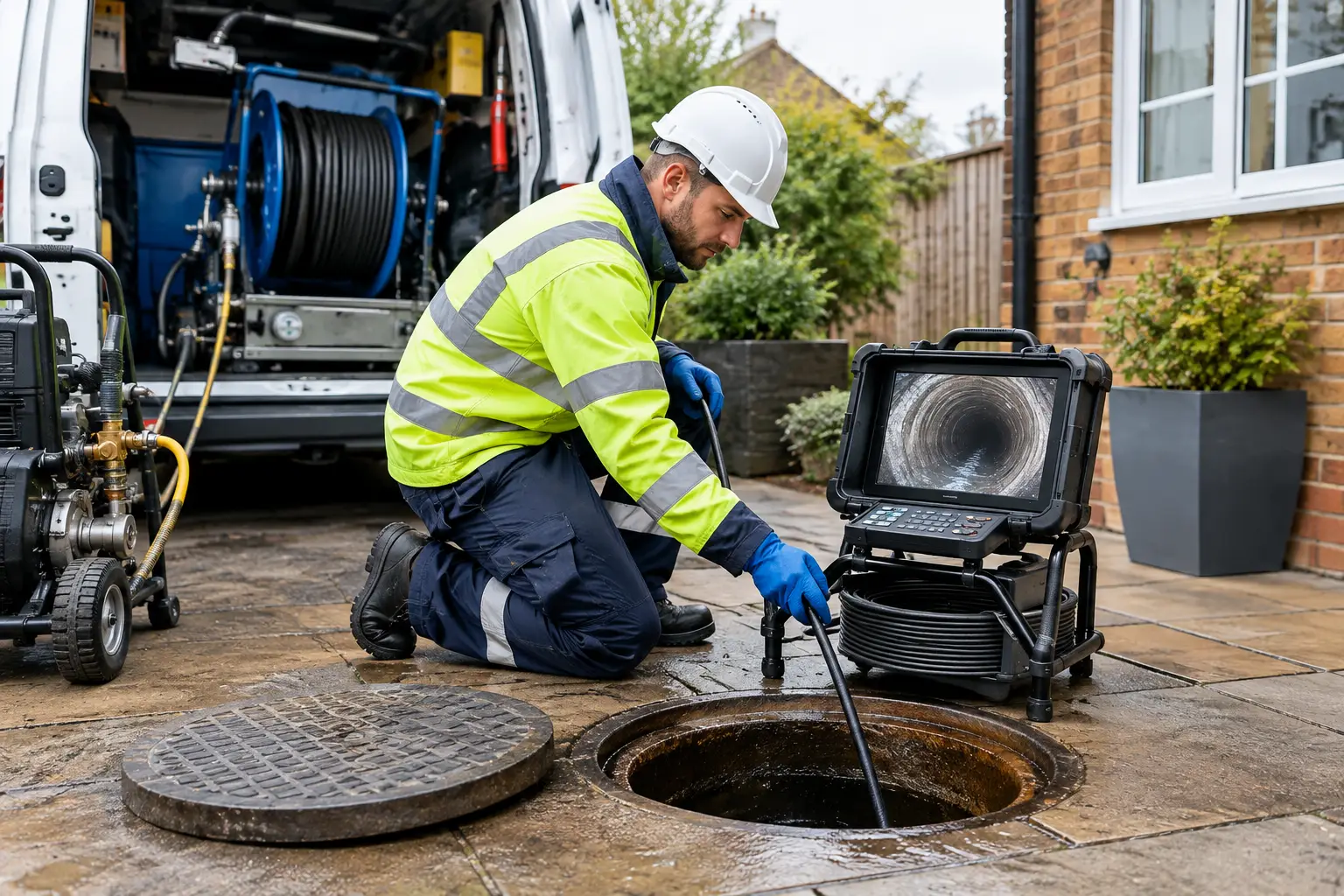
CCTV inspection allows the inside of the drain to be viewed after clearance. This helps identify defects such as fractures, holes, root intrusion, scale build-up and misaligned joints, so repairs can be targeted rather than guessed.
External debris and heavy rainfall
Leaves, soil, litter and silt can block gullies and external drains. During heavy rainfall, a restricted drain can overflow quickly. However, rainwater entering the system may only be part of the issue. If the same gully repeatedly floods in ordinary weather, there may be a deeper blockage or structural problem that needs professional attention.
Why repeated blockages should not be ignored
It is tempting to treat a recurring blockage as an occasional nuisance, especially if it seems to clear after a plunger or drain cleaner. But repeated backups usually indicate that the pipe is not draining freely. The problem may be a partial obstruction, roots, damaged pipework or an issue further along the drainage run.
Chemical products can sometimes be unsuitable for a severe blockage. They may not reach the obstruction, can splash back during later work and do not repair damaged drains. They should never be mixed with other cleaning products. If wastewater is backing up, avoid adding more chemicals and arrange an assessment instead.
A professional drainage visit should explain what has been found, how the blockage has been cleared and whether further investigation is recommended. This is particularly useful for landlords and facilities managers who need a clear record of the problem and a practical plan to reduce repeat call-outs.
How professional drainage clearance works
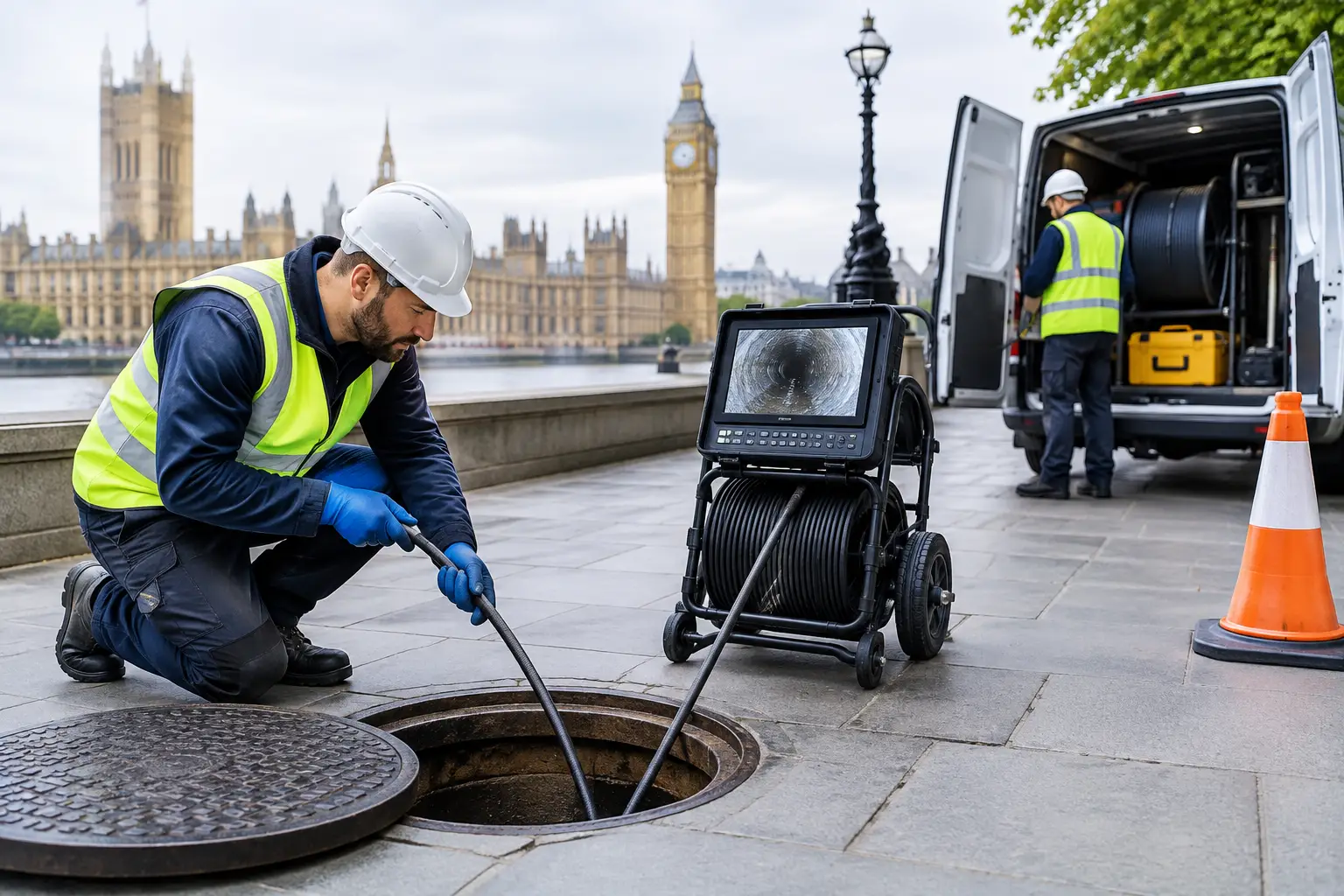
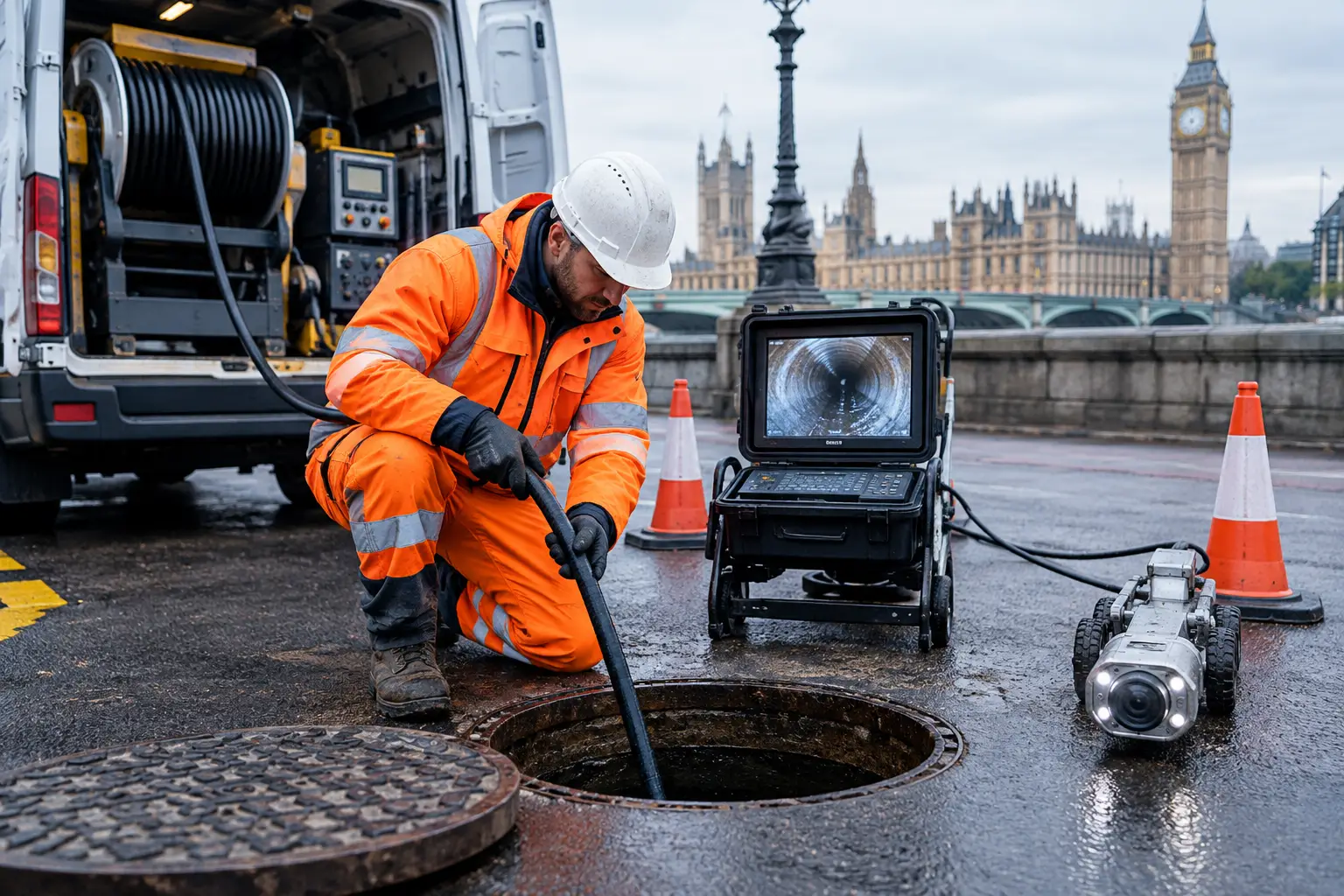
The first step is to identify the affected drainage route and inspect accessible points such as gullies, manholes and internal outlets. Depending on the blockage, specialist equipment may be used to remove debris and restore flow through the pipe.
Once the drain is running again, testing helps confirm that wastewater is moving away correctly. Where there is evidence of a recurring or more serious issue, CCTV drain inspection can show the condition of underground pipework without unnecessary excavation. The footage can reveal whether there is a simple build-up, root ingress, a cracked section or a more significant structural defect.
The right repair depends on what the survey finds. Sometimes thorough cleaning and maintenance are enough. In other cases, a damaged section needs repair to stop debris catching or roots getting back in. A reliable drainage contractor should set out the findings in plain language and explain the available next steps before work proceeds.
Preventing future sewer backups
Good day-to-day habits reduce the chance of many household and commercial drain blockages. Keep wipes, sanitary items, cleaning cloths and other non-flushable products out of toilets. Keep fats, oils, coffee grounds and food waste out of kitchen sinks. Clear leaves and debris from external gullies, particularly before periods of heavy rain.
For restaurants, offices, rental properties and buildings with regular public use, planned drain maintenance can be worthwhile. The correct frequency depends on the type of premises, drainage use and history of blockages. A property with recurring kitchen waste or mature trees nearby may need more attention than a lightly used home.
If you have had one serious backup, do not wait for the next one to investigate. A CCTV survey after clearance can provide useful answers while the drain is accessible and flowing.
When to call for emergency help
Call for professional drain clearance straight away if sewage is entering the property, multiple fixtures are backing up, an external manhole is overflowing, or the issue is affecting a business premises. These situations can escalate quickly and are not suitable for DIY methods.
RF Drainage Experts provides 24/7 emergency drainage support across Greater London and nearby areas, using professional clearance and CCTV inspection equipment to investigate blocked drains and recurring faults. If a sewer backup is disrupting your property, stop using water, keep the area safe and arrange help before further damage spreads.