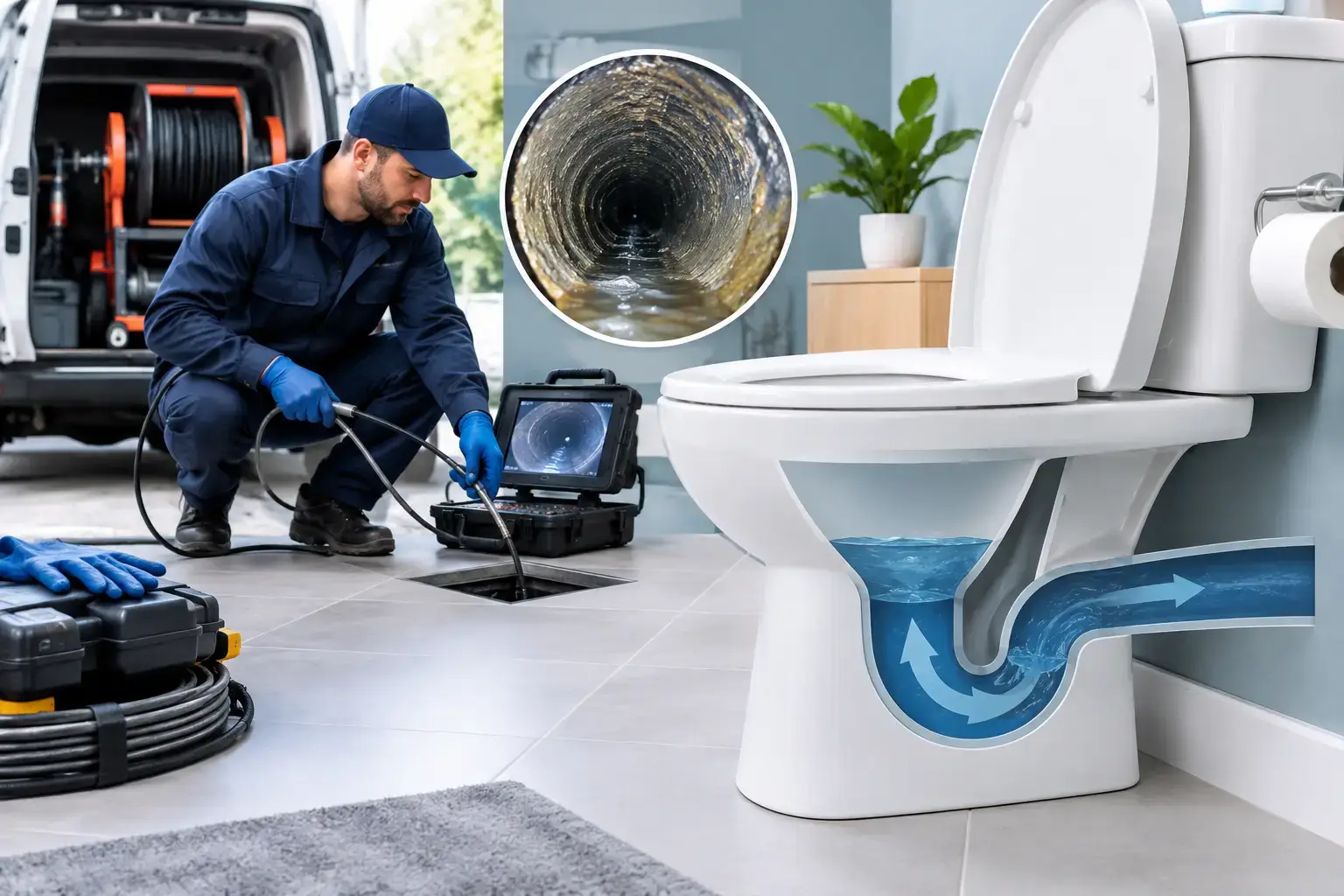
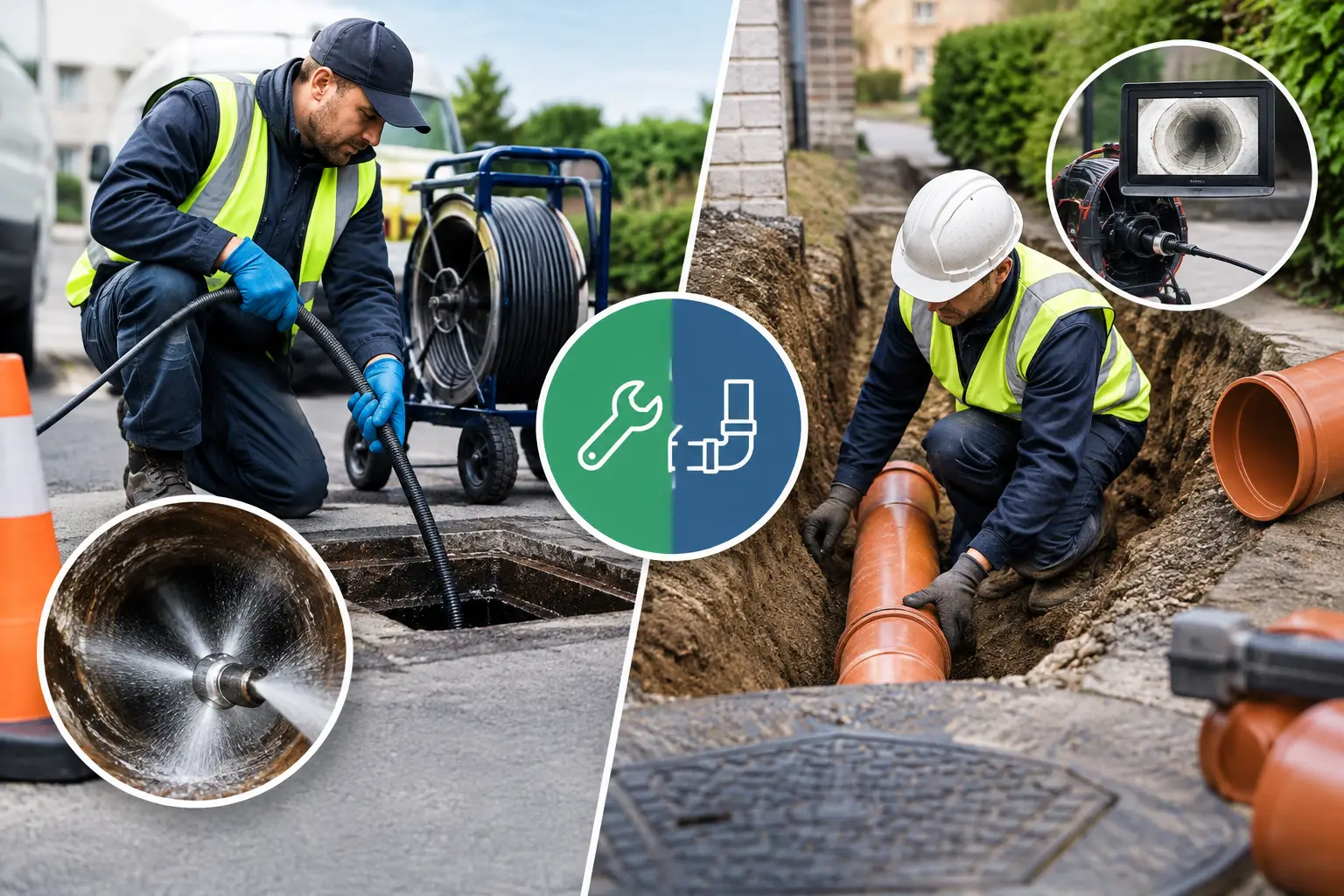
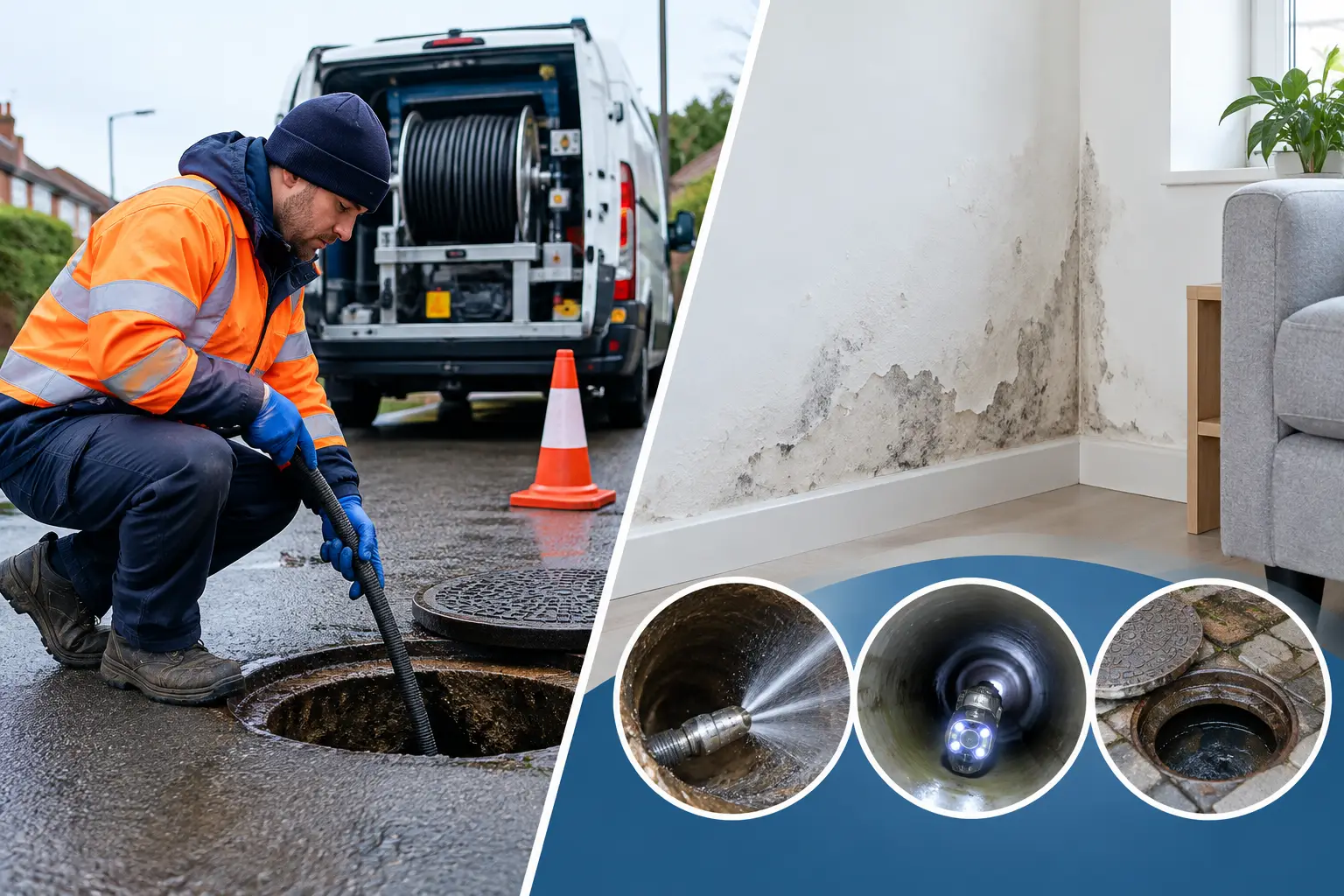
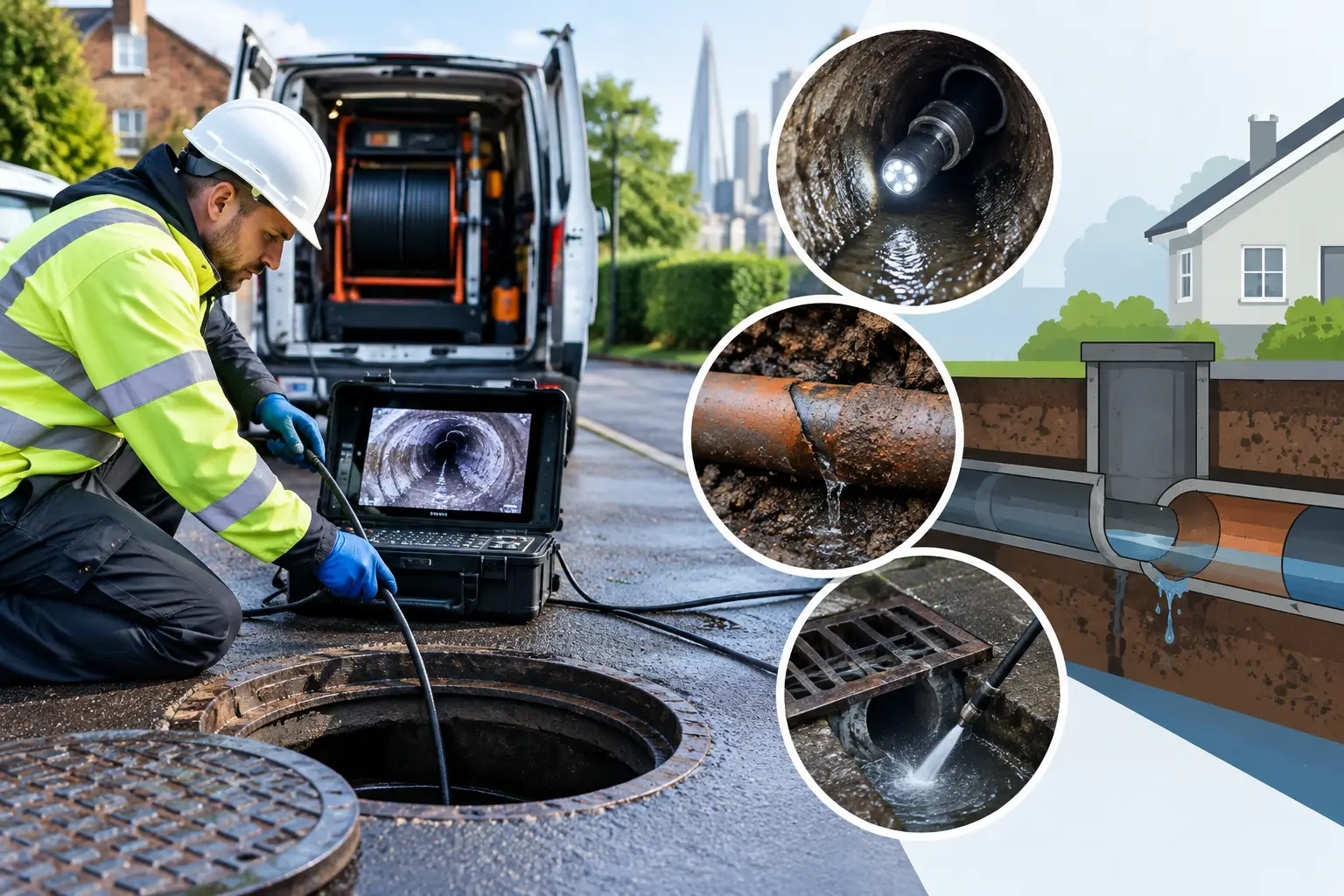
A blocked toilet or overflowing outside gully is stressful at any property. With shared drains, it can be harder to tell where the fault is, who else may be affected and who is responsible for arranging repairs. Acting quickly is still essential, particularly where wastewater is backing up inside, but a clear inspection can prevent assumptions, repeat call-outs and unnecessary disruption.
A shared drainage problem does not always mean every neighbour will see the same symptoms. One home may have a slow-draining kitchen sink while another experiences an overflowing manhole. The common pipework underground could still be the cause.
What are shared drains?
A shared drain is a private drainpipe used by more than one property before it joins a public sewer. In many terraces, converted houses, flats and commercial units, wastewater from toilets, sinks, baths or kitchens runs into a common section of pipe. This arrangement is common across older parts of Greater London, including properties where the drainage layout has changed over time.
The pipe serving only your own property is usually called a private drain. Once drainage from two or more properties combines, it may become a shared drain. Further downstream, it may connect to a public sewer maintained by the local water company.
That sounds straightforward, but real drainage layouts are not always obvious. Pipes may run beneath gardens, shared driveways, side passages or neighbouring land. A manhole cover near your property does not automatically mean the pipe beneath it is yours alone. This is why a professional CCTV drain survey is often the most useful first step when responsibility or the source of a blockage is unclear.
Why shared drain blockages need prompt attention
A blockage in a shared pipe can affect more than convenience. Wastewater has nowhere to go when the pipe is obstructed, so it may rise through the lowest available outlet. This can be a ground-floor toilet, shower, bath, gully or manhole chamber.
Sewage contamination can create hygiene concerns and damage flooring, walls, stock or equipment. For landlords and facilities managers, it can also disrupt tenants or trading. Waiting to see whether the water level falls may turn a manageable blockage into an emergency drain repair.
Common warning signs include:
- Toilets that rise unusually high or do not flush away properly
- Water appearing in a shower tray, bath or floor drain when another fixture is used
- Overflowing external gullies or manholes
- Gurgling sounds from plugholes and toilets
- Persistent foul odours around drains, gardens or communal areas
- More than one property reporting slow drainage at the same time
A single slow basin does not always point to a shared drain. It may be a local blockage in the trap or branch pipe. However, symptoms affecting several fixtures, especially toilets and external drainage, require closer investigation.
What causes blockages in shared drains?
The cause can be ordinary household waste, but the location and age of shared pipework often make problems more complex. Wet wipes, sanitary products, kitchen fat, food waste and excess toilet paper can build up where pipe gradients are poor or where the drain changes direction.
Tree roots are another common issue in older underground drains. They can enter through small cracks or displaced joints, then trap debris until the pipe narrows or blocks. A drain may clear temporarily, only to block again because the underlying crack, root intrusion or collapsed section has not been repaired.
Structural faults are also possible. Ground movement, ageing clay pipes, poor previous repairs and vehicle loading near a drain can leave pipework fractured, misaligned or partially collapsed. In these cases, high-pressure drain cleaning may restore flow, but it will not resolve the defect itself.
For restaurants, cafés and other food premises, fat, oil and grease can be a particular risk. It cools and hardens inside the pipe, catching other material as it builds. Planned maintenance is often more practical than waiting for a shared kitchen drain to fail during busy trading hours.
Who is responsible for a shared drain?
Responsibility depends on where the pipe runs, who it serves and whether it has been adopted as part of the public sewer network. Many shared drains and laterals in England were transferred to water companies in 2011, but there are exceptions. Private pipework within a property boundary, drainage serving a single building or unusual site layouts can still remain the responsibility of a homeowner, landlord, freeholder or managing agent.
For flats and converted buildings, the lease or management arrangements may also set out how maintenance costs are handled. In a commercial premises, responsibility can depend on the tenancy agreement and the location of the affected pipework.
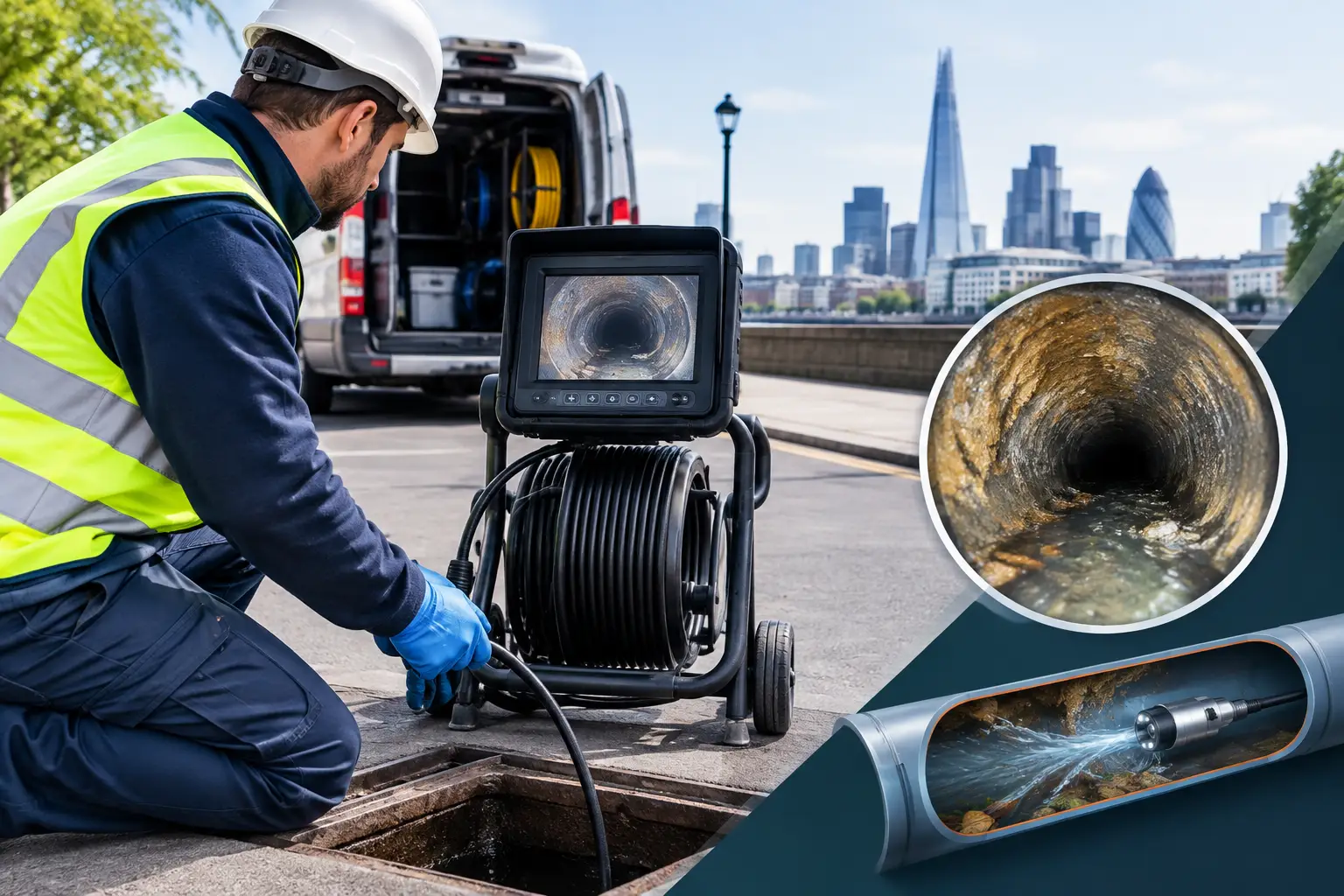
It is sensible not to rely on guesswork or verbal accounts of where a pipe goes. A CCTV inspection can identify the route of the drain, the point where lines join and the exact location of a blockage or defect. This information helps owners, neighbours, managing agents and the relevant water company discuss the issue with evidence rather than assumptions.
If sewage is escaping or backing up into the property, arrange emergency clearance first. Responsibility can be clarified once the immediate risk has been controlled.
What to do when you suspect a shared drainage problem
Start by reducing water use. Avoid flushing toilets repeatedly, running washing machines, emptying sinks or using dishwashers until the drainage has been assessed. More water entering a blocked system can force wastewater back through low-level fixtures or outside chambers.
If it is practical and safe, check whether an outside gully or manhole is overflowing. Do not remove a cover if it is heavy, damaged or surrounded by wastewater. Keep children and pets away from the area, and avoid direct contact with contaminated water.
A quick conversation with adjoining properties can be helpful. Ask whether they have noticed slow drainage, gurgling, bad smells or an overflow. This does not establish responsibility, but it can indicate whether the issue is local to one property or further along the shared line.
Avoid using strong chemical drain cleaners in an attempt to solve a suspected shared blockage. They are rarely effective against heavy debris, roots or structural failures, and they can create a hazard for anyone opening or cleaning the drain afterwards. A plunger may help a minor local blockage, but it is not a suitable solution for sewage backing up across several fixtures.
How a professional inspection identifies the real fault
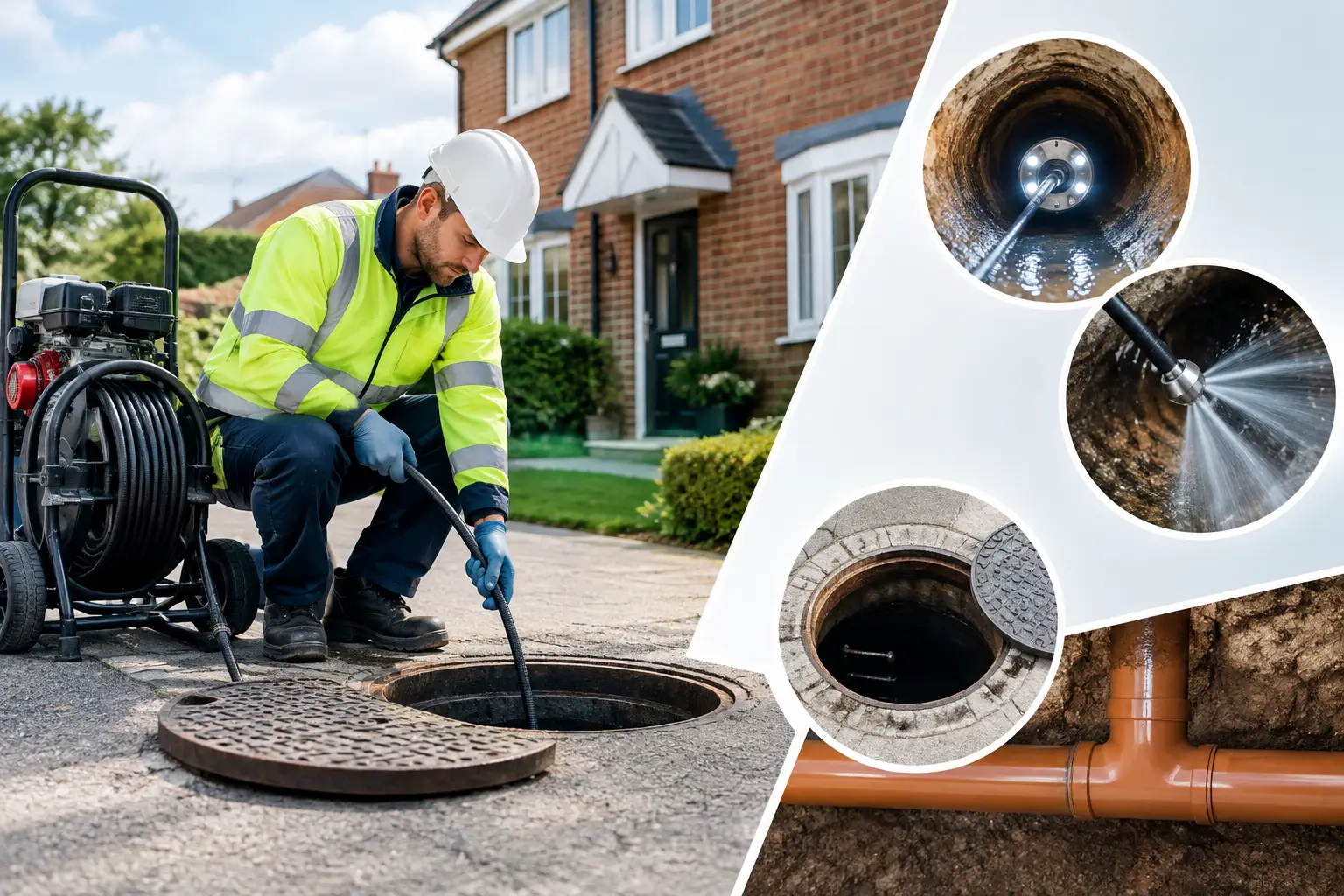
Effective shared drain work begins with finding the blockage rather than simply clearing the nearest access point. A drainage engineer can inspect gullies, manholes and connected pipework, then use professional drain cleaning equipment to remove blockages where appropriate.
After the line has been cleared, CCTV drain inspection technology can show what caused the failure and whether the pipe is structurally sound. The camera can reveal root ingress, cracked pipework, displaced joints, scale build-up, poor connections and repeated points of obstruction.
This matters because a clean-looking drain can still have a defect that causes the same problem weeks later. Where a repair is needed, the findings make it easier to explain the recommended work clearly and decide whether the affected section is private, shared or potentially part of the public network.
At RF Drainage Experts, emergency drainage work is approached with this practical sequence: make the area safe, restore flow where possible, inspect the cause and explain the next steps in plain language. For homes, rental properties and businesses across Greater London, that means less uncertainty during an already disruptive problem.
Preventing repeat shared drain problems
Shared drainage depends on the habits of more than one household or occupier, so prevention works best when it is simple and consistent. Toilets should only be used for toilet paper and human waste. Wipes, even those described as flushable, can catch on rough joints and combine with grease or other debris.
In kitchens, allow cooking fat and oil to cool in a container before putting it in the bin. Use sink strainers to catch food scraps, and keep outdoor gullies clear of leaves, soil and loose rubbish. Property managers may benefit from routine checks of communal drainage points, particularly before periods of heavy rain.
If a shared drain has blocked more than once, do not treat every incident as an isolated event. A CCTV survey after clearance can be the difference between repeated emergency visits and a properly targeted repair.
When wastewater is rising, a toilet will not flush or a manhole is overflowing, the priority is to stop using water and arrange professional help without delay. Fast action protects the property, gives everyone affected a clearer picture of the fault and creates the best chance of resolving the problem before it spreads.