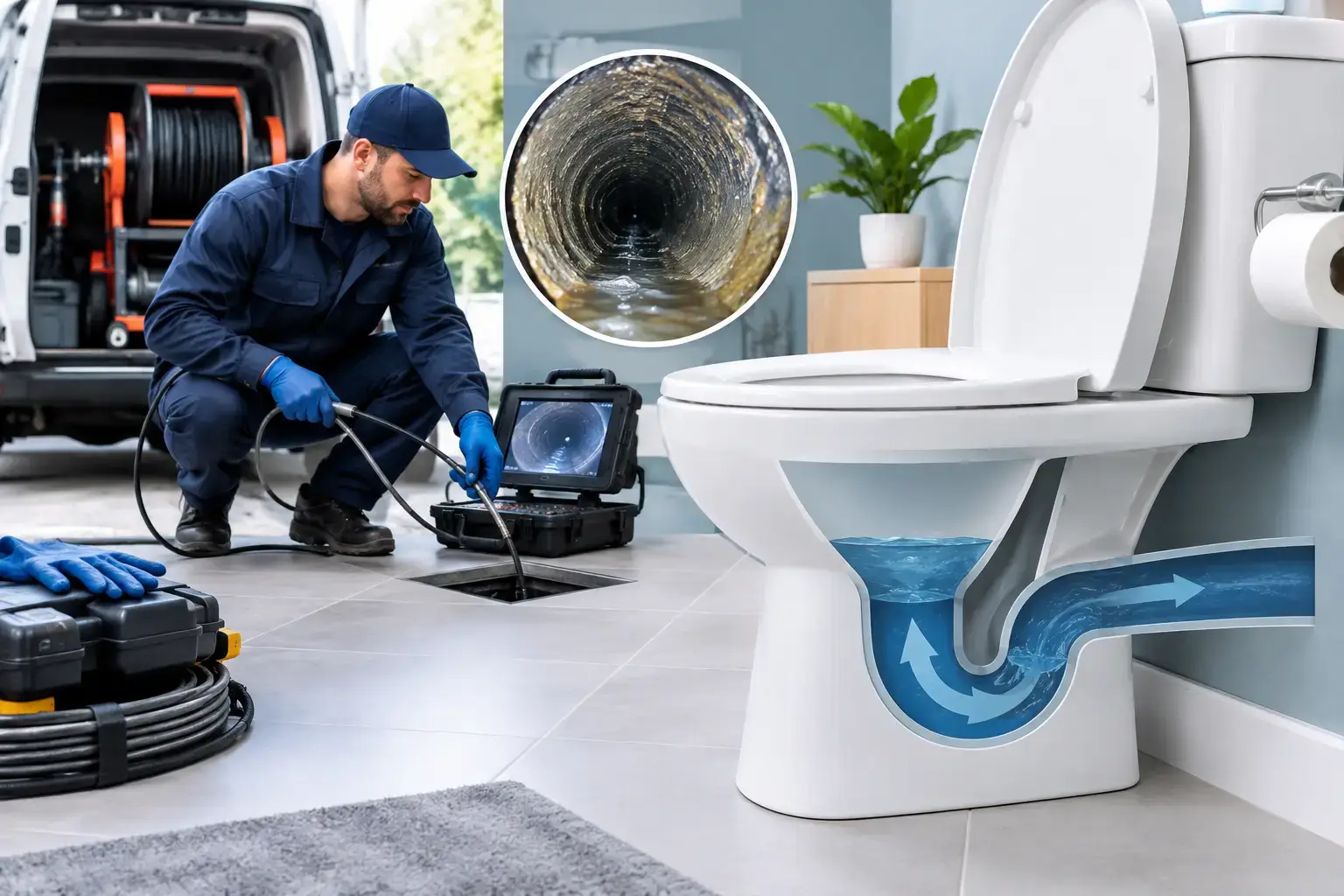
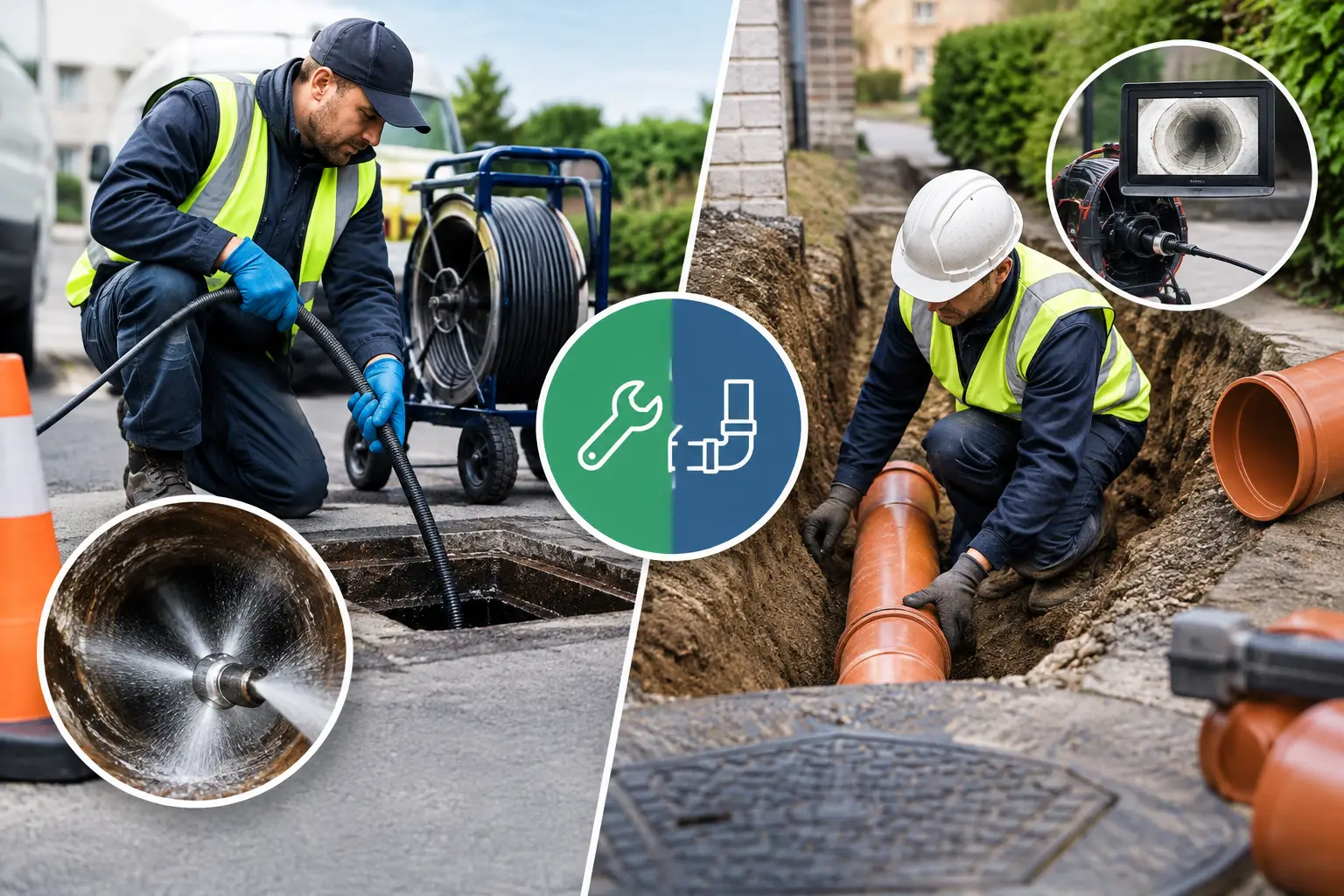
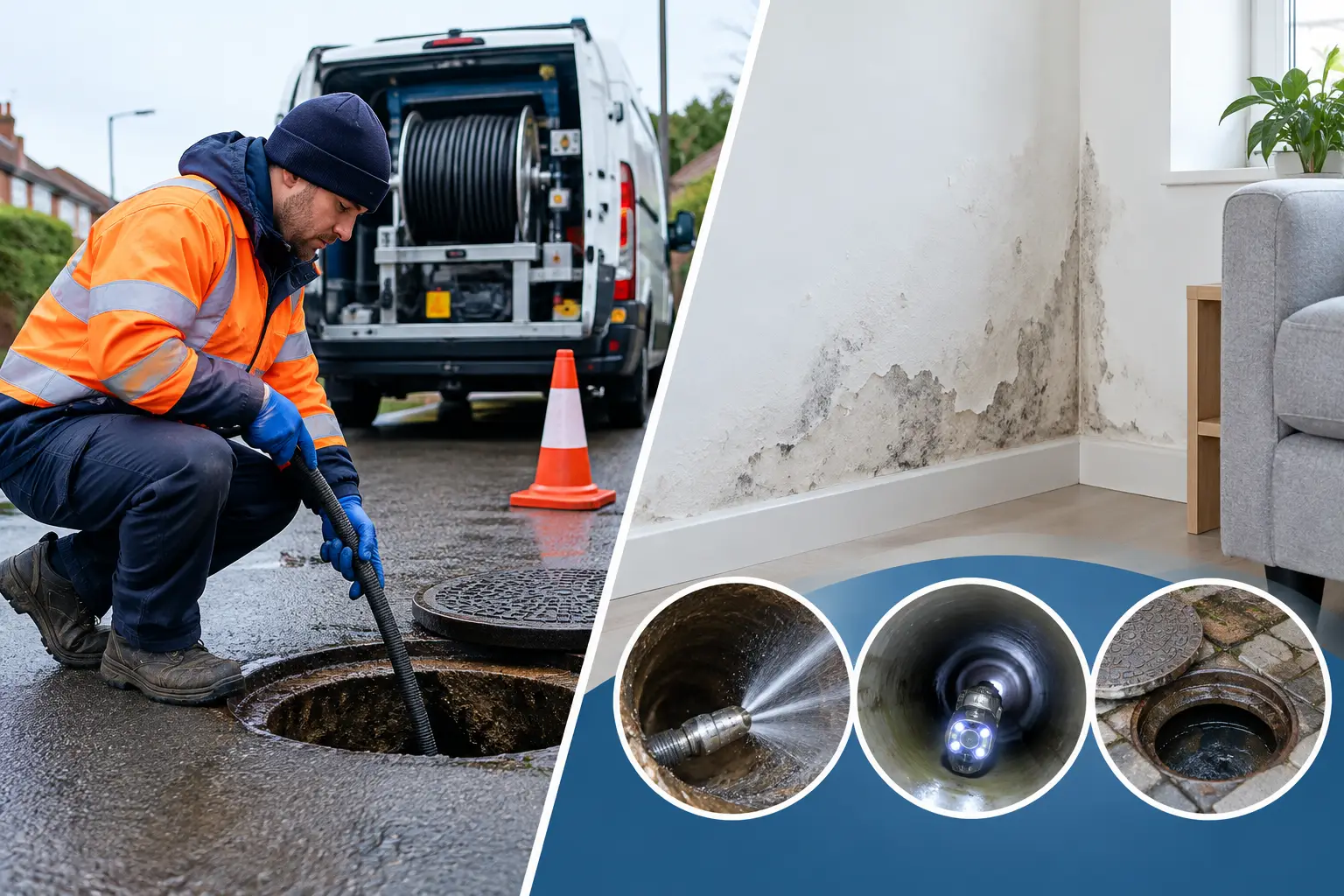
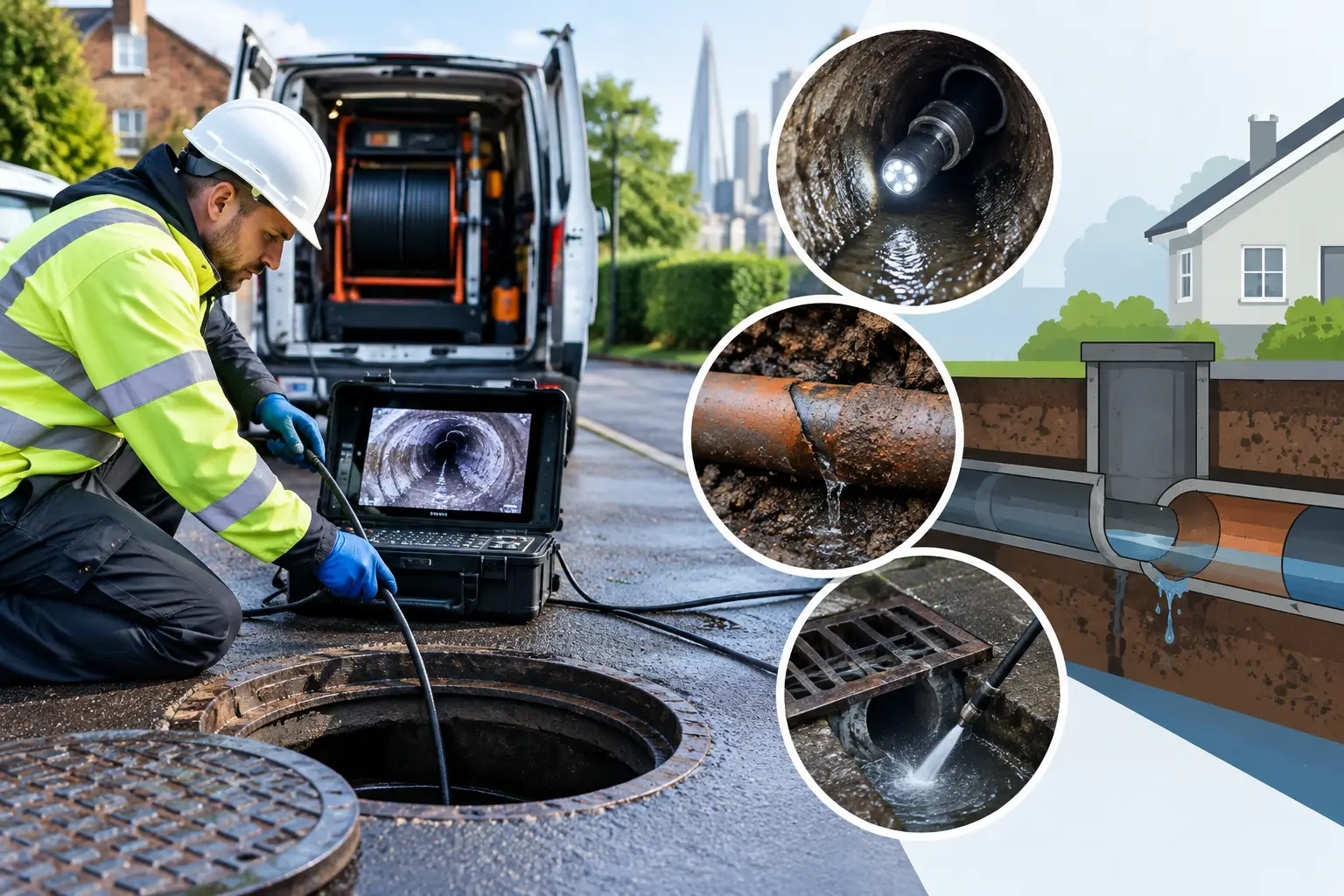
A toilet that starts pushing wastewater back into the bowl, onto the floor or through another drain needs immediate attention. Knowing how to handle toilet backflow can limit water damage, reduce exposure to contaminated wastewater and help a drainage engineer identify the real cause sooner. The first priority is not getting the toilet working again – it is stopping more water from entering the drainage system.
Treat toilet backflow as a hygiene emergency
Toilet backflow usually means wastewater cannot travel away through the pipework as it should. It may rise in the pan after flushing, bubble up through a shower or bath waste, or appear around an external gully or manhole. The water may contain sewage, so keep children, pets and anyone not involved well away from the affected area.
Do not flush the toilet again to test it. Avoid using nearby sinks, showers, baths, washing machines and dishwashers too, particularly if more than one fitting is draining slowly. Each use sends more water towards a possible blockage and can make an overflow worse.
If wastewater is already on the floor, close the bathroom door if possible and prevent it travelling into other rooms. Open a window for ventilation, but do not use fans that could spread droplets around the property.
Stop the water source if the toilet is overflowing
If clean water is continuously entering the toilet bowl and causing it to overflow, remove the cistern lid and carefully lift the float. This may stop the cistern refilling. You can also turn the small isolation valve on the water pipe behind or beside the toilet clockwise, if it is accessible and you can do so safely.
This only stops the toilet’s water supply. It will not clear a blockage in the soil pipe or drain, but it can prevent the overflow becoming more severe.
Where the water level is high but stable, do not reach into the bowl or attempt to dismantle the toilet. Put on disposable gloves if you need to move items away from the area, then wash your hands thoroughly afterwards. If you have been splashed with wastewater, clean exposed skin promptly with soap and water.
Work out whether the blockage is local or deeper in the drain
The pattern of the problem offers useful clues. A toilet that blocks occasionally but no other fitting is affected may have a local obstruction in the pan or nearby branch pipe. Excess paper, wipes, sanitary products, small objects and buildup can all restrict the route from the toilet.
Backflow affecting several fixtures is more likely to point to a blockage further down the drainage system. For example, if flushing the toilet makes water rise in the bath, or if a washing machine causes toilet water to move, the shared drain may be obstructed. In houses and commercial premises, the issue may be in an external drain, gully, inspection chamber or sewer connection.
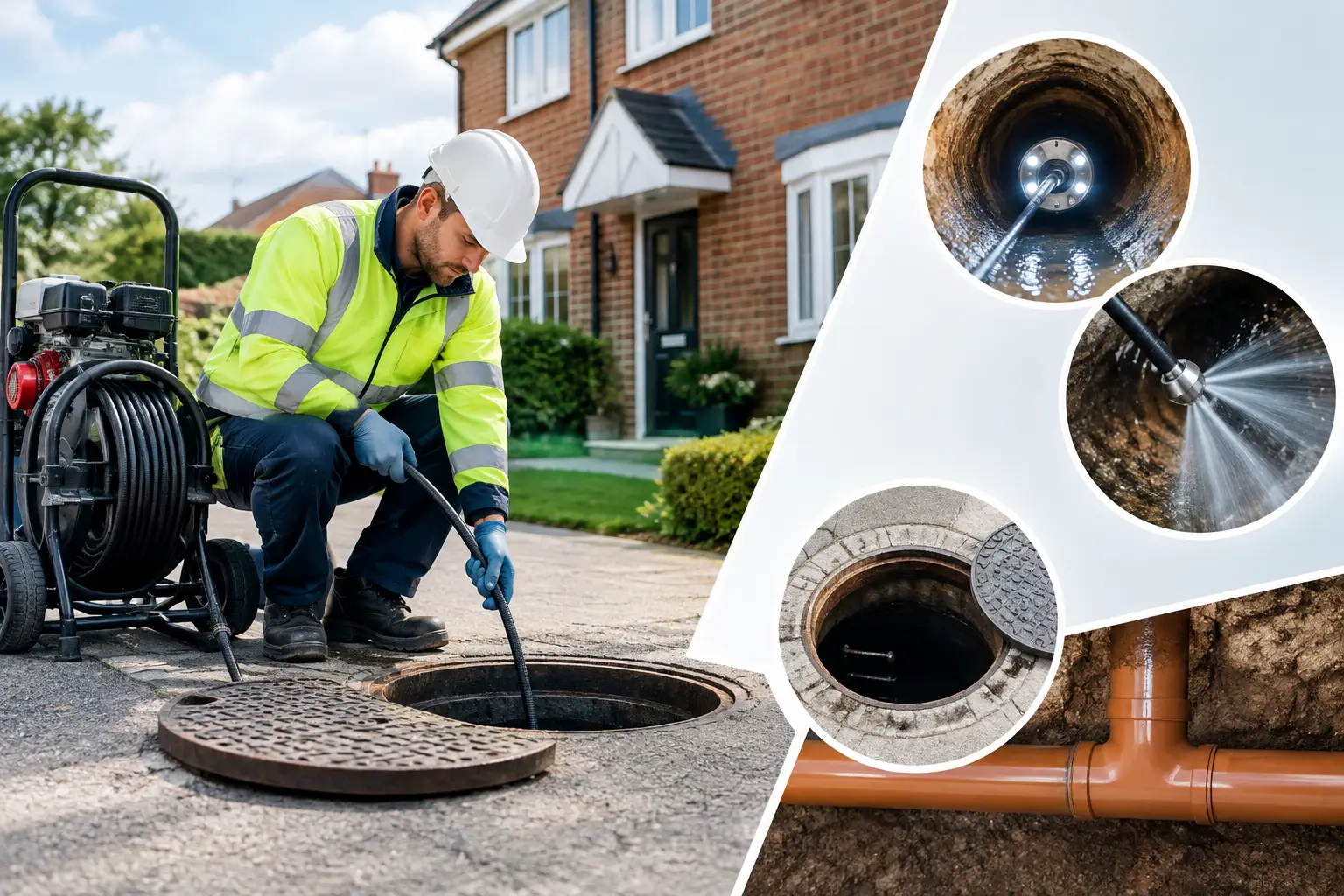
Outside, check from a safe distance for wastewater around gullies or manholes. Do not lift a manhole cover yourself, especially if sewage is visible or the cover is heavy, damaged or in a public access area. A professional drainage inspection can establish whether the restriction is caused by wipes and waste, grease, root intrusion, collapsed pipework or another underlying fault.
What you can do safely before help arrives
For a minor, isolated toilet blockage where there is no overflow and no backflow through other drains, a toilet plunger may be worth trying. Use a proper flange plunger, which creates a better seal around the toilet outlet than a flat sink plunger. Keep the bowl level low enough to avoid splashing, seal the outlet and use steady, controlled plunges rather than forceful movements.
Stop immediately if the water rises, the blockage does not shift after a few attempts, or other fixtures are affected. Repeated flushing and aggressive plunging can send contaminated water over the rim or push an obstruction further into the pipework.
Avoid chemical drain cleaners. These products are rarely a reliable answer for toilet backflow and can create a hazard if they splash or remain in standing water. They may also complicate later work for the drainage engineer. Do not use boiling water either, as it can crack porcelain or damage seals.
If wastewater has escaped, place old towels or absorbent materials around the edge only if you can do so without contact with the contaminated water. Do not put those materials in the washing machine. Bag them securely for disposal, then disinfect nearby hard surfaces once the area is safe and the source of the backflow has been resolved.
When urgent drain clearance is the right call
Professional help is advisable whenever a toilet is overflowing, sewage has backed up, multiple drains are slow, or the problem returns after plunging. These signs can indicate a blockage beyond the toilet itself, where household tools cannot reach safely or effectively.
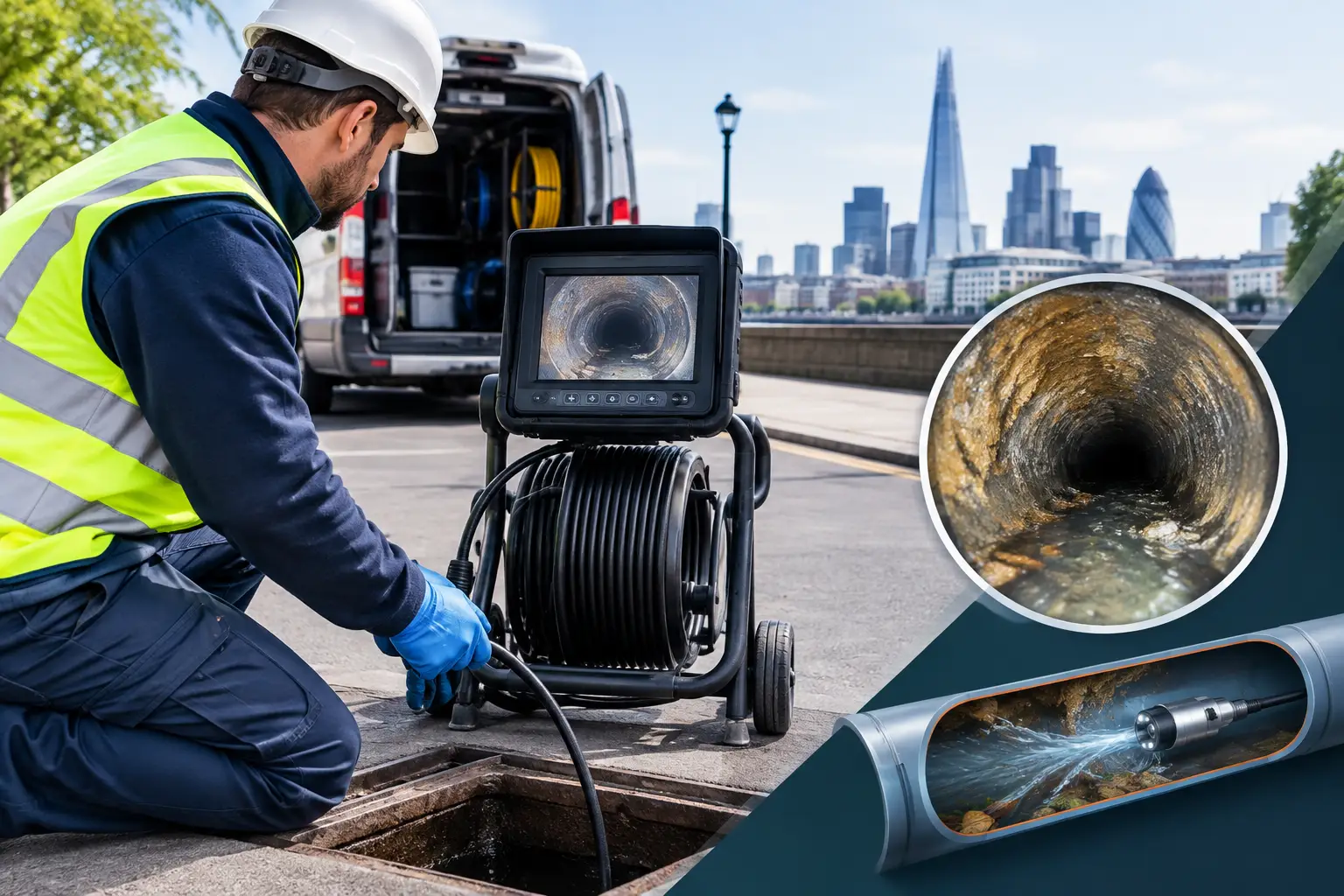
An emergency drainage team can clear the obstruction using suitable professional equipment and assess the condition of the drain. Where the cause is uncertain or the issue keeps returning, CCTV drain inspection can show what is happening inside underground pipework. This helps distinguish a straightforward blockage from root growth, cracks, displaced joints or damage that needs repair.
For landlords, facilities managers and business owners, acting early can also reduce disruption to tenants, staff and customers. A backflow incident in a shared bathroom, restaurant washroom, office or rental property should be isolated quickly and dealt with as a hygiene concern, not left until normal working hours.
RF Drainage Experts provides 24/7 emergency drain clearance across Greater London and nearby areas, with clear communication about the problem found and the work needed to resolve it. If the toilet is backing up now, stop using connected water fixtures and arrange urgent assistance rather than risking further contamination.
Cleaning up after toilet backflow
Only begin a full clean once the blockage has been cleared and there is no further risk of wastewater entering the room. Wear disposable gloves and, where splashing or cleaning close to sewage is likely, suitable eye protection and a face covering. Keep the room ventilated.
Hard, non-porous surfaces such as tile, vinyl and sealed flooring can usually be cleaned with detergent first, then disinfected using a suitable household disinfectant according to its label instructions. Wipe from cleaner areas towards more contaminated ones and use disposable cloths where possible.
Carpet, unsealed wood, plasterboard, furniture and other absorbent materials are more complicated. Wastewater can soak below the visible surface, leaving odours and a hygiene risk. If sewage has reached these materials, seek professional advice on cleaning, removal or restoration rather than simply covering the area with disinfectant.
Wash reusable tools separately from other laundry only after they have been thoroughly disinfected. Never mix cleaning chemicals, particularly bleach with other products, as dangerous fumes can result.
Preventing another toilet backflow
The best prevention starts with what goes into the toilet. Toilets are designed for human waste and toilet paper. Wipes labelled flushable, cotton buds, sanitary products, dental floss, nappies, paper towels and cooking fat do not belong in the drainage system. They can catch on rough pipe surfaces, combine with other waste and create a stubborn blockage.
In older properties, recurring backflow may not be caused by day-to-day use alone. Tree roots can enter weakened joints, and ageing drains can crack, sag or become misaligned. If blockages return in the same toilet or external drain, a CCTV survey is often more useful than repeated emergency clearance because it identifies the condition behind the symptom.
For commercial premises and managed properties, planned drain maintenance can be sensible where toilets receive heavy use or where grease, debris or root issues have previously affected the drainage system. The right frequency depends on the building, its usage and the history of the drain.
A toilet backflow is unpleasant, but quick, calm action makes a real difference: stop using water, contain the area, avoid risky DIY methods and get the drainage system checked when the signs point beyond a simple blockage.