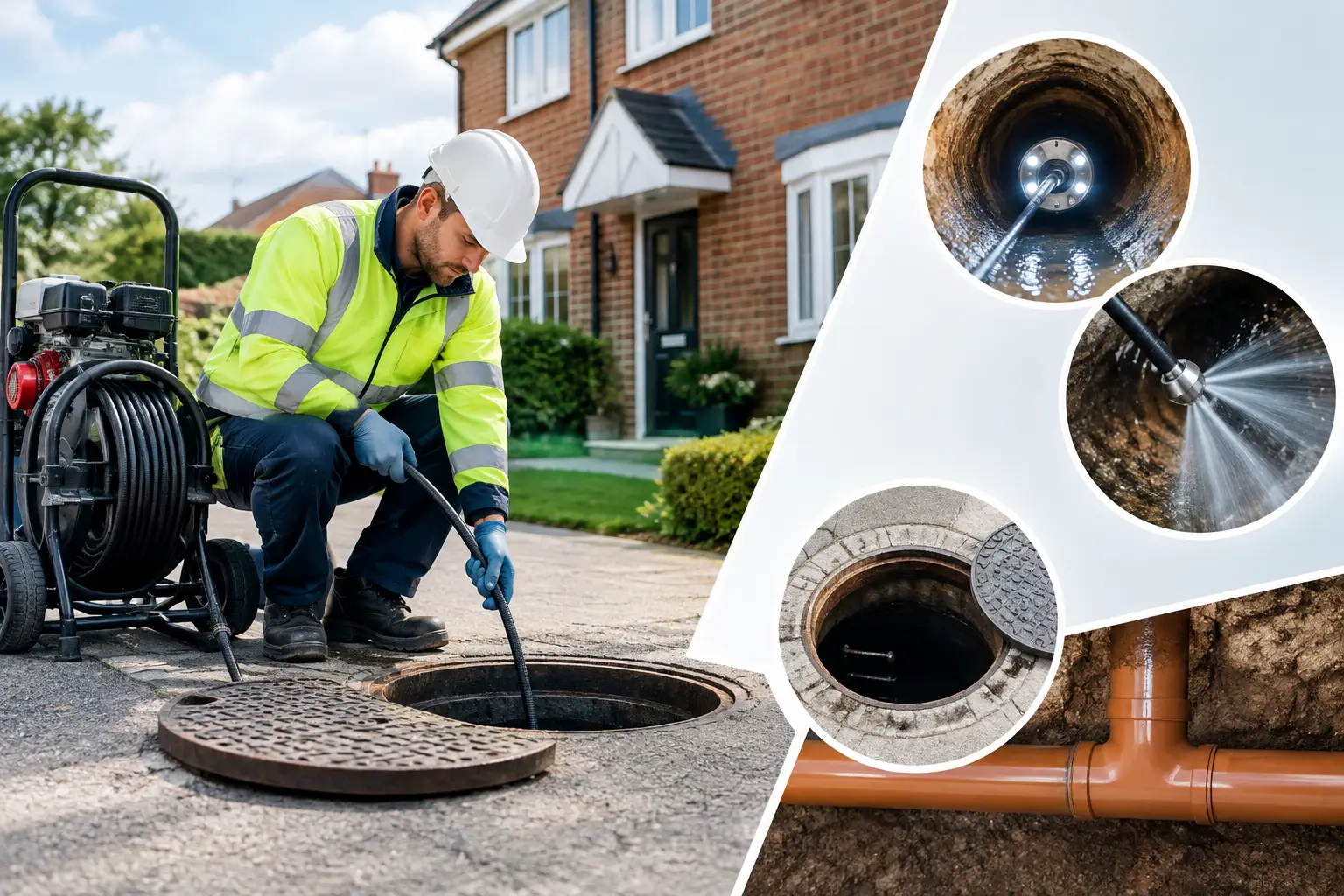
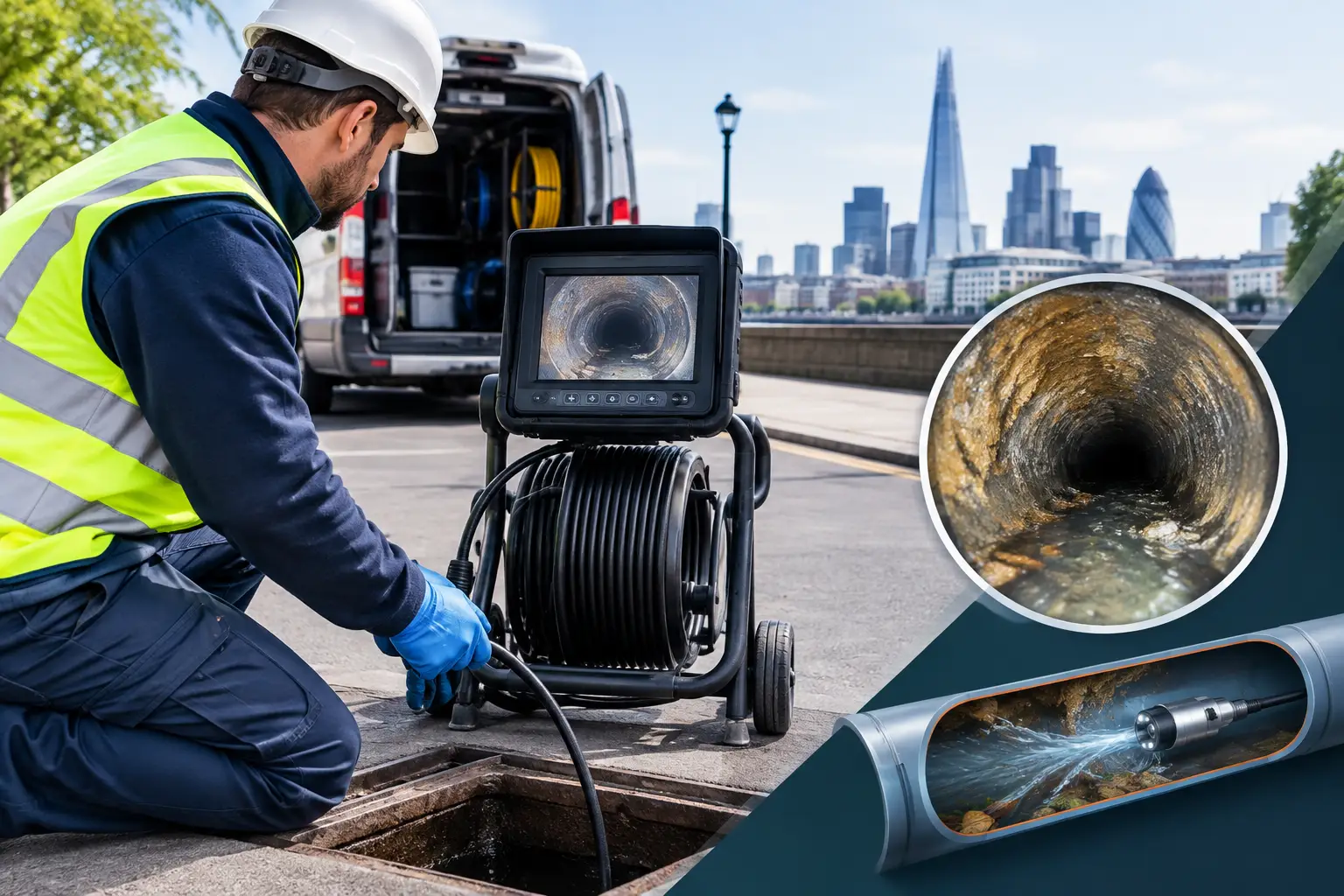
A drain can appear clear after a blockage is removed, yet the same problem may return weeks later. CCTV drainage gives a clear view inside pipework, helping identify what is actually causing slow flow, foul smells, overflowing gullies or repeated backups. Rather than guessing at an underground fault, a professional inspection can show where the issue is and what work is genuinely needed.
For homeowners, landlords and business owners, that clarity matters. Drainage pipes are usually hidden below floors, gardens, driveways or public-facing areas, where unnecessary excavation can be disruptive and costly. A camera survey helps focus the repair on the right section of drain.
What is CCTV drainage?
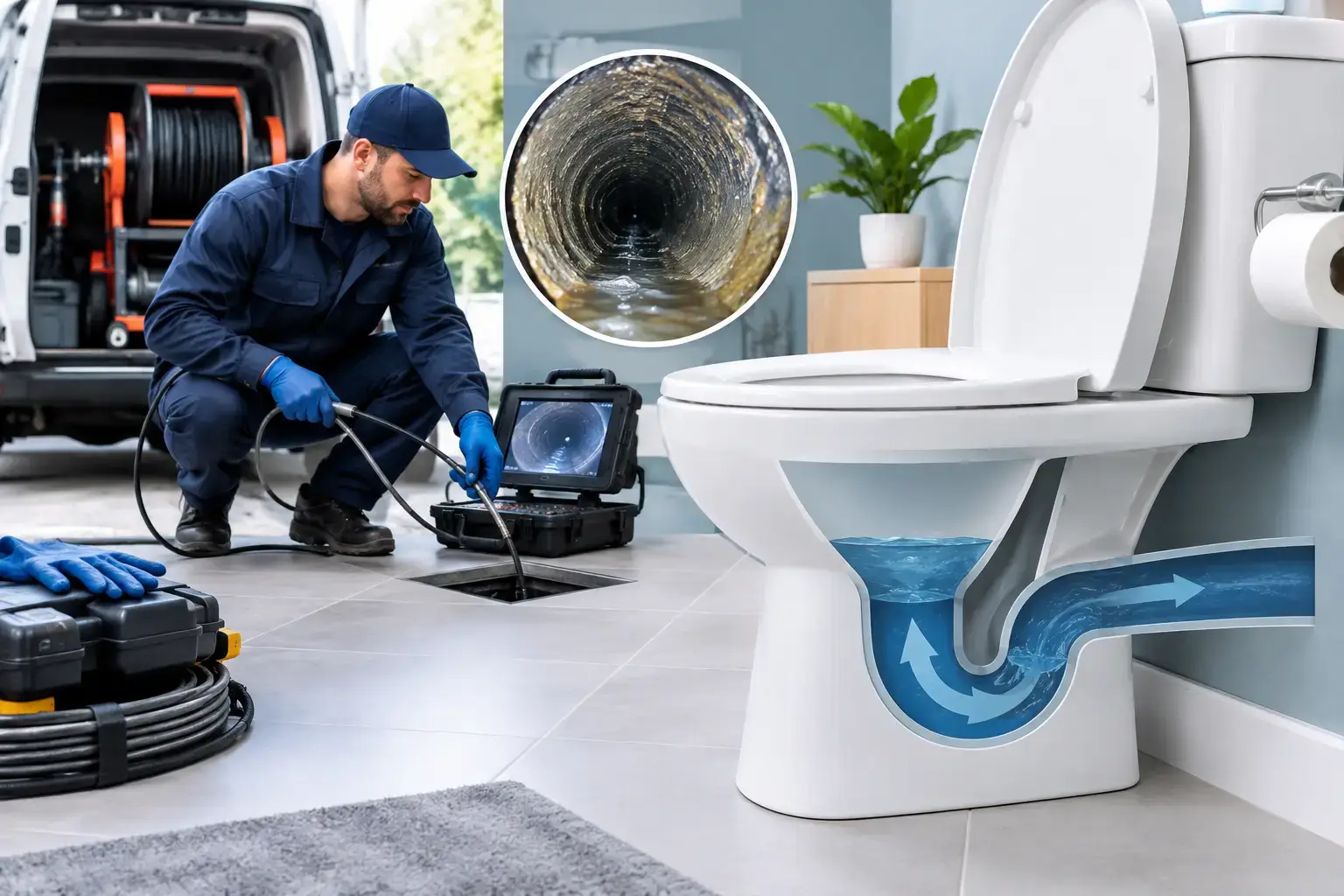
CCTV drainage is an inspection method that uses a specialist waterproof camera on a flexible rod or cable. The camera is carefully fed through the drain while the operative watches a live image of the pipe’s internal condition.
This makes it possible to inspect bends, joints and longer runs of pipework without lifting floors or digging up external areas simply to investigate. The survey can reveal whether a drain is blocked by debris, damaged by roots, cracked, displaced or holding standing water because it has lost its correct fall.
The camera does not repair the problem by itself. Its value is in diagnosis. Once the cause and location are visible, the next step can be planned properly, whether that is drain cleaning, root removal, a targeted repair or further investigation of connected pipework.
When a CCTV drain inspection is worth arranging
A one-off blockage caused by excess toilet paper, food waste or a build-up of grease may only need professional clearance. However, recurring symptoms often point to an underlying issue that jetting or rodding alone cannot resolve for long.
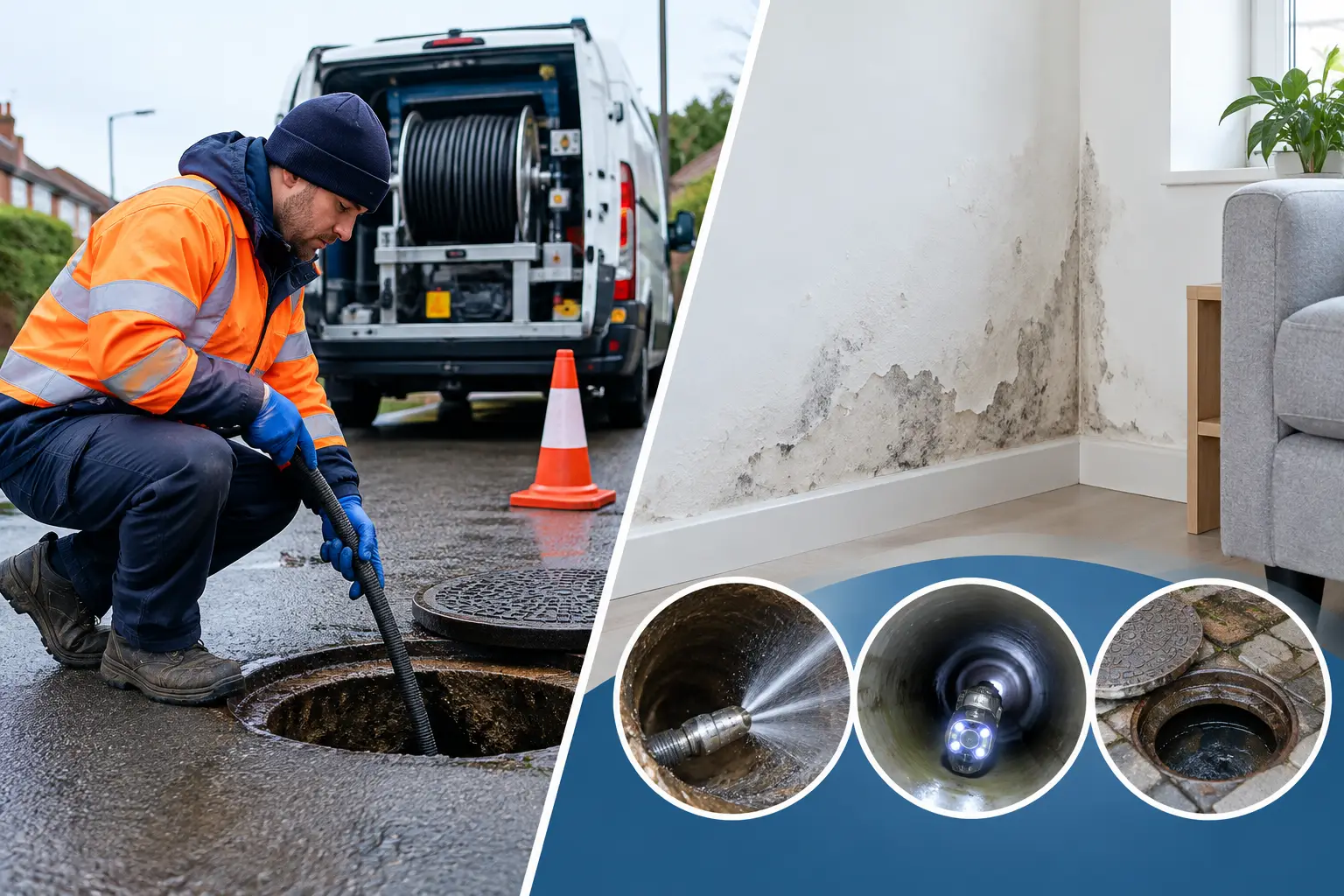
A CCTV drainage survey is particularly useful when a toilet repeatedly backs up, an external drain overflows after being cleared, or water drains away slowly despite regular cleaning. Persistent odours, damp patches near drain runs, unexplained subsidence around external pipework and signs of sewage escaping from a gully also need prompt attention.
It can also be sensible before buying a property, after building work near drainage lines, or when a landlord is trying to establish why tenants are reporting repeated drainage failures. In commercial premises, especially restaurants, shops and offices, an inspection can reduce uncertainty before a minor disruption becomes an operational problem.
Common problems a camera can reveal
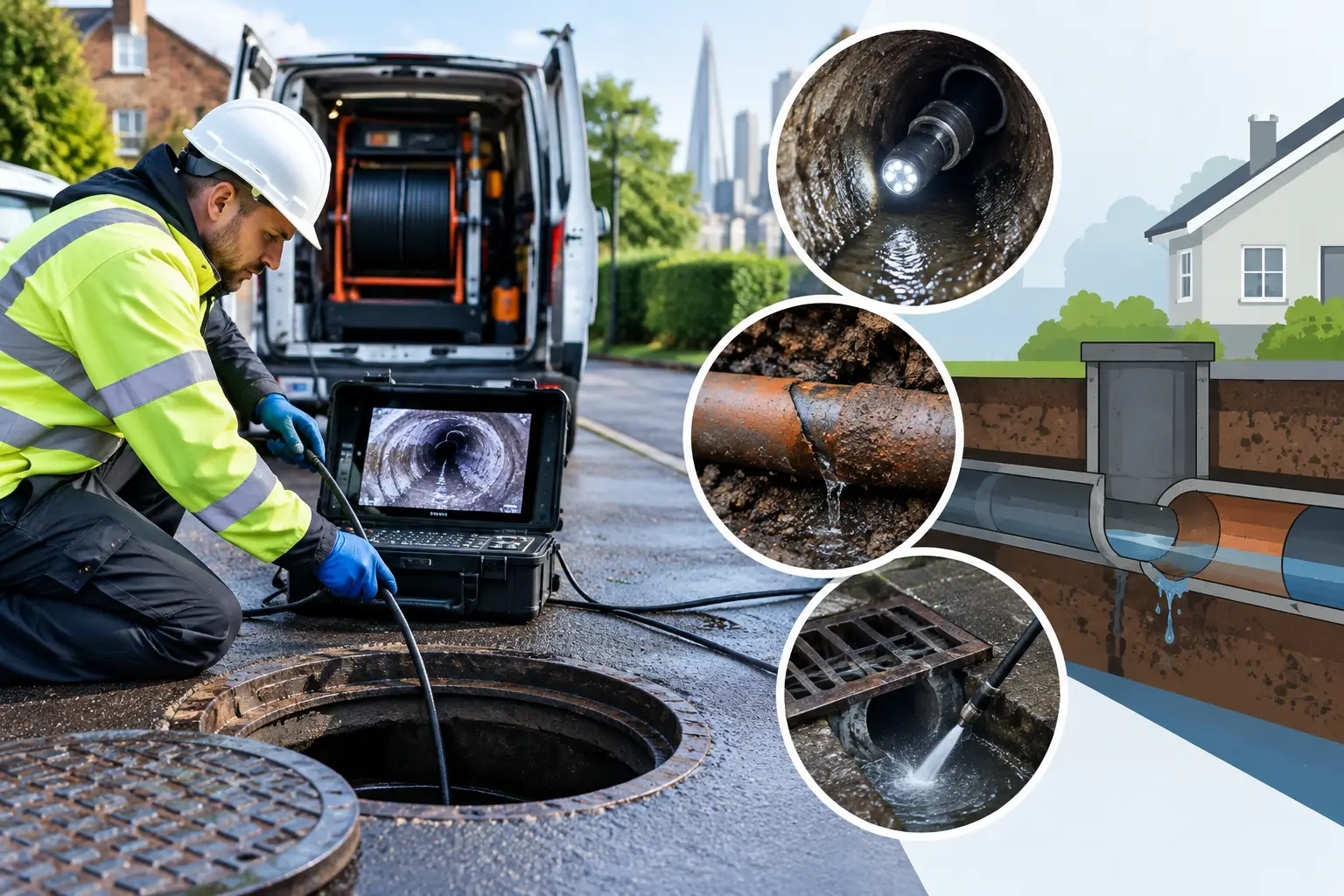
Blocked drains are not all alike. A camera can distinguish between a local obstruction and a structural defect that keeps trapping waste. Common findings include grease and scale build-up, wipes and foreign objects, silt, rubble from construction work, root intrusion, cracked pipes and displaced joints.
Tree roots are a frequent cause of repeat trouble in older drainage systems. Roots can enter through small openings at joints or cracks and gradually grow inside the pipe. They catch paper and waste, restricting flow until the drain blocks. Clearing the roots may restore flow, but the damaged entry point may still need repair to prevent regrowth.
A survey may also identify a pipe that has collapsed, become misshapen or developed a belly. A belly is a low section where water and debris collect rather than flowing freely. The appropriate solution depends on the extent of the fault and the condition of the surrounding drain run.
What happens during CCTV drainage work?
The process usually begins with a conversation about the symptoms, where they occur and how often they have returned. This helps the drainage operative decide which access point to use, such as a manhole, rodding point or suitable internal connection.
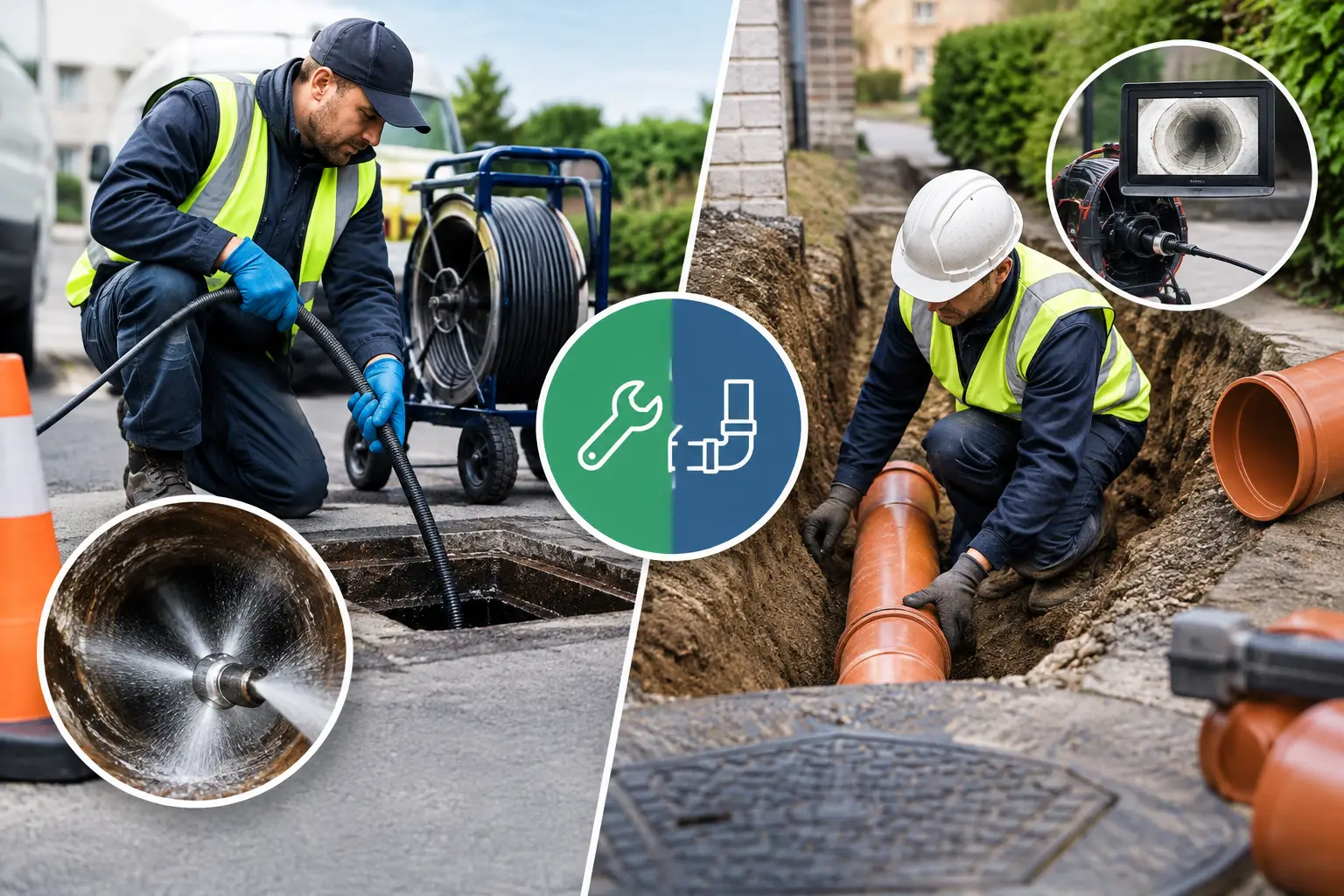
If the pipe is heavily blocked, it may need clearing first so the camera can travel through it and produce a useful image. Professional drain clearance equipment can remove many obstructions, after which the camera inspection checks whether there is a hidden reason for the blockage.
The camera is then moved through the pipework at a controlled pace. The operative looks for defects, notes their approximate position and explains the findings in straightforward terms. Good communication is vital here: you should understand whether the drain needs further work now, whether it can be monitored, and why that recommendation has been made.
Not every drain issue requires excavation. Where damage is limited, a localised repair may be possible. Where a pipe has collapsed or has widespread deterioration, more substantial repair work may be necessary. The right approach depends on the survey results, the pipe material, access, depth and the severity of the defect.
Why repeated drain clearance is not always the answer
Clearing a blocked drain quickly is often essential, particularly where wastewater is backing up into a property or an external area is flooding. But a clear drain is not automatically a sound drain.
If the same kitchen drain blocks every few months, the cause might be a build-up of fats and food waste. It could also be poor pipe condition, a defective joint or an incorrectly connected section of pipework. Similarly, recurring toilet blockages might result from unsuitable items being flushed, but they can also indicate roots, a damaged sewer connection or an obstruction further along the system.
CCTV inspection avoids the false economy of treating symptoms repeatedly without addressing the cause. That does not mean every blockage requires a camera survey. For a simple, isolated blockage that clears fully and does not return, it may not be necessary. Where problems recur or there are signs of damage, however, an inspection is a practical next step.
Protecting drains after an inspection
Once the immediate problem is resolved, small changes can help reduce future blockages. In kitchens, avoid pouring cooking oil, fat or coffee grounds into the sink. In bathrooms and toilets, use a bin for wipes, sanitary products, cotton buds and other items that do not break down like toilet paper.
External drains and gullies should be kept clear of leaves, mud and garden debris, especially before periods of heavy rain. Properties with mature trees near drainage lines may benefit from monitoring if roots have previously been found.
For landlords and facilities managers, keeping a record of recurring faults and drainage work can be useful. It helps spot patterns, provides context if a new issue develops and supports more informed maintenance decisions across a property or site.
CCTV drainage for homes and commercial premises
The principle is the same whether the affected property is a house, flat, restaurant, office or retail unit: identify the fault accurately, explain the options clearly and carry out work that matches the condition of the drain.
Commercial drainage problems can have wider consequences because blocked toilets, foul smells or wastewater backups affect staff, customers and trading hours. A prompt CCTV inspection can help determine whether the issue is limited to internal pipework, an external drain or a deeper section of the drainage system.
At residential properties, the concern is often disruption and hygiene. An overflowing manhole or backed-up toilet is stressful, particularly when children, tenants or vulnerable occupants are present. Fast clearance may be the first priority, followed by a camera survey if there is any indication that the problem will return.
Questions people often ask about CCTV drain surveys
Can a CCTV camera find a leak?
A camera can identify cracks, open joints, displaced sections and other defects that may allow water to escape. The visible condition of the pipe helps establish whether a leak is likely, although the exact impact depends on the type and location of the damage.
Does the drain have to be excavated?
No. The purpose of CCTV drainage is to inspect underground pipework without excavation where possible. If a serious structural issue is found, excavation may be recommended, but the survey helps ensure it is targeted rather than speculative.
Can a camera survey find the cause of bad smells?
Often, yes. Bad smells can be caused by trapped waste, damaged pipework, poor flow, blocked gullies or a drainage defect. An inspection can help rule in or rule out hidden pipework problems after obvious causes have been checked.
Is CCTV inspection useful after drain jetting?
Yes, particularly when a blockage has returned or the drain has been difficult to clear. Jetting restores flow, while the camera can reveal whether roots, cracks, scale or another defect caused the blockage in the first place.
When drainage trouble keeps coming back, the most helpful next move is not another guess. Arrange a professional inspection, ask for the findings to be explained clearly, and choose the repair based on what the drain is actually showing.