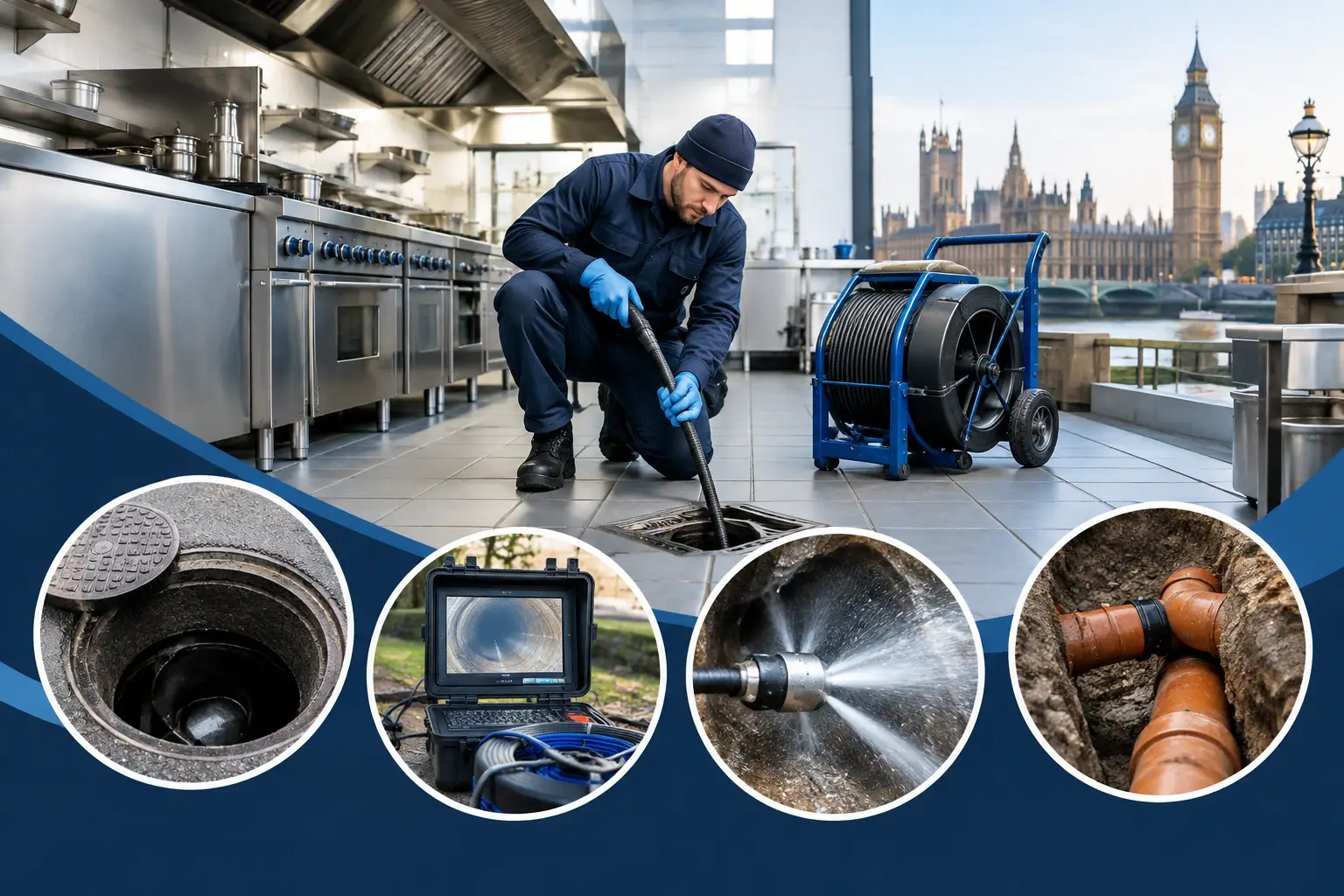
A busy kitchen can go from service-ready to unusable surprisingly quickly when wastewater stops draining. A backed-up sink, overflowing floor gully or persistent foul smell affects hygiene, staff safety and the ability to prepare food. This commercial kitchen drainage guide explains what causes the most common problems, how to reduce disruption and when professional help is needed.
Why commercial kitchen drainage needs closer attention
Commercial kitchens place far more pressure on drainage systems than most domestic kitchens. Cooking oils, fats, food scraps, detergent residue and hot water all pass through the system repeatedly throughout the day. Over time, material builds up inside pipework and reduces the space available for wastewater to flow.
The problem is not always visible at the sink. A drain may appear to empty normally between busy periods, while a developing blockage sits further along the line. Once water use increases, the restriction can cause slow drainage, unpleasant odours or wastewater backing up through a floor drain.
For restaurants, cafés, takeaways, schools, pubs and other food premises, a drainage failure is more than an inconvenience. It can interrupt service, create a slip risk and leave areas unsuitable for normal use until the issue is resolved.
The most common commercial kitchen drainage problems
Fat, oil and grease build-up
Fat, oil and grease are among the leading causes of kitchen drain blockages. Warm oil may look harmless when it is poured away, but it cools as it travels through the pipes. It then sticks to the pipe walls and traps food particles, creating a dense obstruction over time.
This is why a sink can begin draining slowly even when staff are careful not to put obvious solids down it. Grease build-up is often gradual, and a chemical drain cleaner rarely removes the full deposit. A professional clean may be needed to restore the pipe’s internal diameter properly.
Food waste and coffee grounds
Rice, pasta, vegetable peelings, flour, eggshell and coffee grounds can all cause trouble. Some materials swell in water, while others settle in bends and low points in the pipework. A sink strainer helps, but it must be emptied regularly rather than allowing waste to build up around the plughole.
Food waste should be collected and disposed of through the appropriate waste route. Treating the kitchen sink as a general waste chute creates avoidable blockages.
Blocked floor drains and gullies
Floor drains are designed to collect wash-down water and spills, but they can fill with food debris, grease, broken packaging and sediment. If a floor gully blocks, wastewater may spread across the kitchen during cleaning or a busy service period.
External gullies can also become blocked by leaves, litter and grease deposits, especially where kitchen waste lines connect outside. These should be checked as part of a planned maintenance routine, particularly before periods of high trade.
Drain smells and recurring slow drainage
Bad smells often point to decomposing waste inside the pipework, a dry trap or a partial blockage. A recurring smell should not be masked with air freshener. It needs investigating, because odours can be an early warning that waste is collecting where it should not.
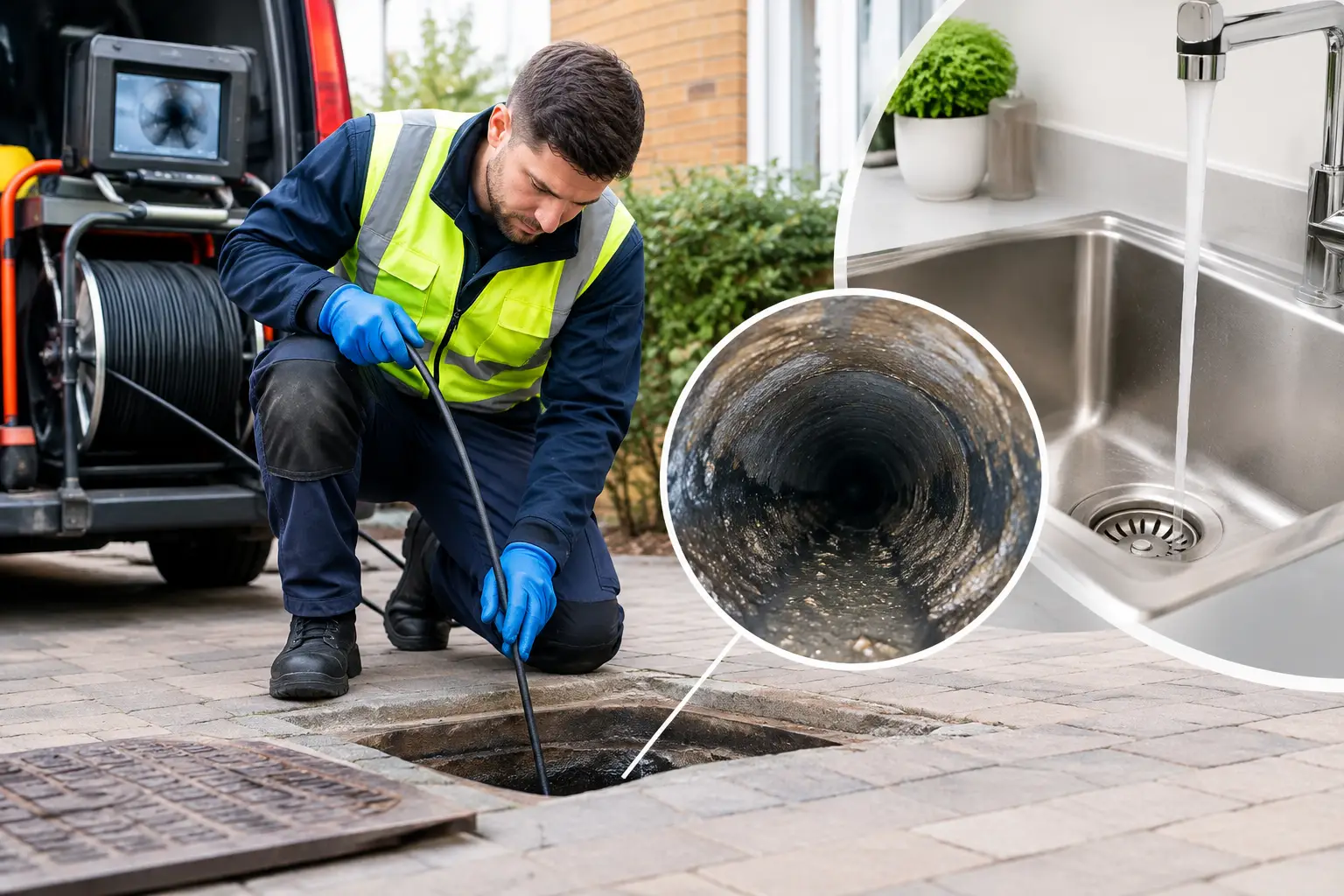
If the same sink or gully blocks repeatedly, there may be a larger issue beyond the immediate obstruction. Root intrusion, damaged pipework, poor falls or a defect in the underground drainage system can all contribute. CCTV drain inspection allows the inside of the drain to be assessed without unnecessary digging.
Early warning signs your kitchen should not ignore
Kitchen staff are usually the first to notice a drainage issue. Slow-running water, gurgling sounds, standing water around a floor drain, foul odours and water rising in another sink are all signs that the system needs attention.
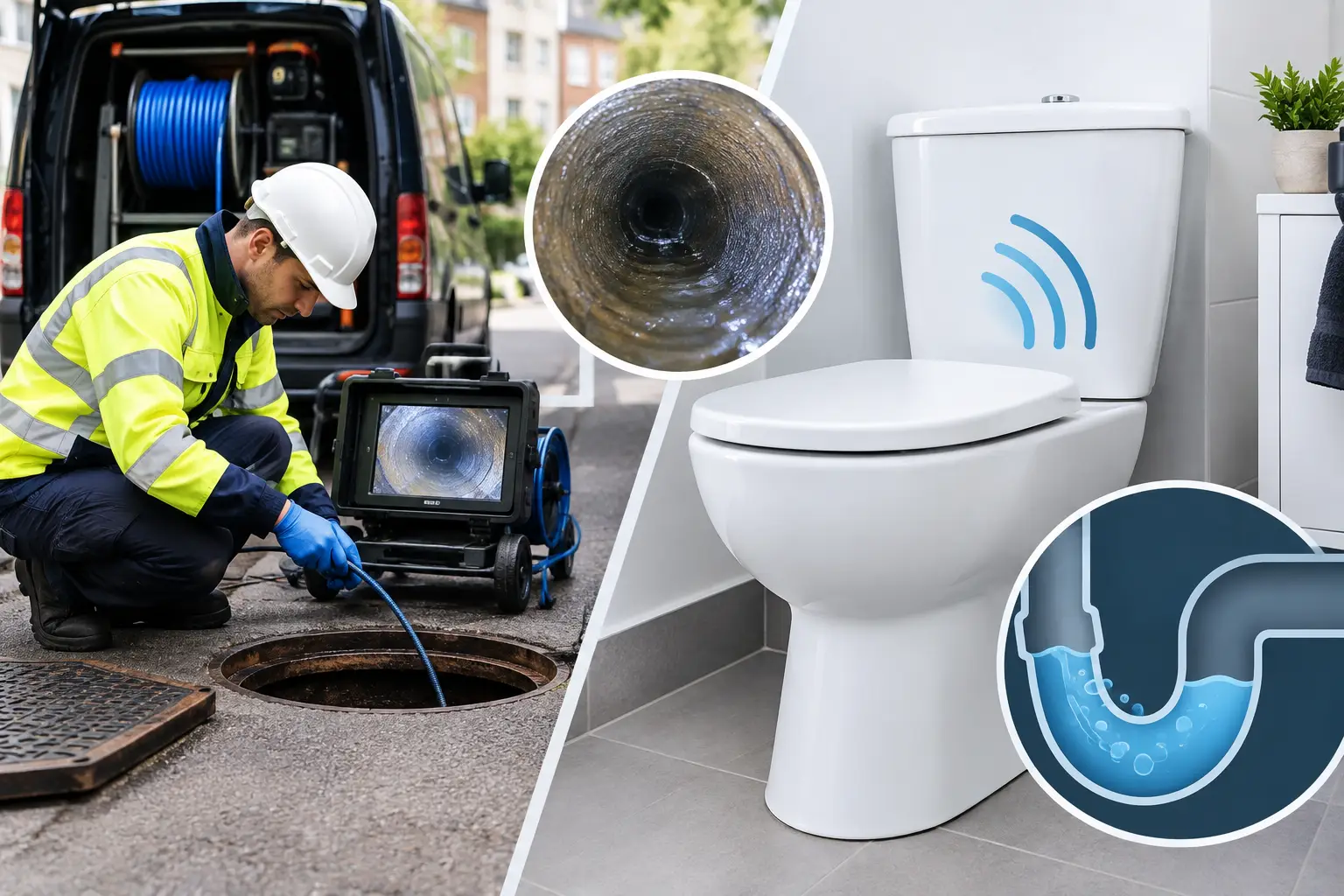
A toilet or external gully backing up when kitchen equipment is draining can indicate a blockage further along a shared waste line or drain. Do not continue using high volumes of water in the hope that the problem will clear. This can turn a manageable blockage into an internal flood.
Where sewage, contaminated wastewater or a serious overflow is involved, keep staff and customers away from the affected area where possible. Stop using connected sinks and appliances, contain the spill if it is safe to do so, and arrange urgent drainage assistance.
Practical habits that prevent blockages
Prevention works best when it is part of the kitchen’s normal closing and cleaning routine. The aim is to keep solid waste and grease out of the drainage system before they have the chance to collect.
Staff should scrape plates, trays and pans into a bin before washing them. Sink strainers should be fitted where suitable and emptied often. Used cooking oil must be collected for proper disposal, never poured into a sink, gully or toilet.
Hot water alone will not solve a grease problem. It may move grease further down the pipe before it cools and settles again. Likewise, harsh chemicals can be unsuitable for some drainage systems and may fail to deal with a heavy build-up. If slow drainage is already present, it is usually better to arrange a professional assessment than repeatedly using off-the-shelf products.
A clear cleaning checklist also helps. Include sink strainers, floor drain grates and visible gullies, and make sure staff know what should never enter the drains. Small changes in day-to-day practice can reduce the likelihood of an emergency during a busy shift.
When planned drain maintenance makes sense
There is no single maintenance schedule that suits every commercial kitchen. It depends on the type of food prepared, trading hours, water use, the age of the building and whether the property has a history of drainage issues. A high-volume takeaway kitchen will usually need more frequent attention than a small office kitchenette.
Planned cleaning can remove grease, food deposits and debris before they restrict the system. It is particularly useful for premises that have experienced previous blockages, unpleasant odours or drainage issues during peak trading periods.
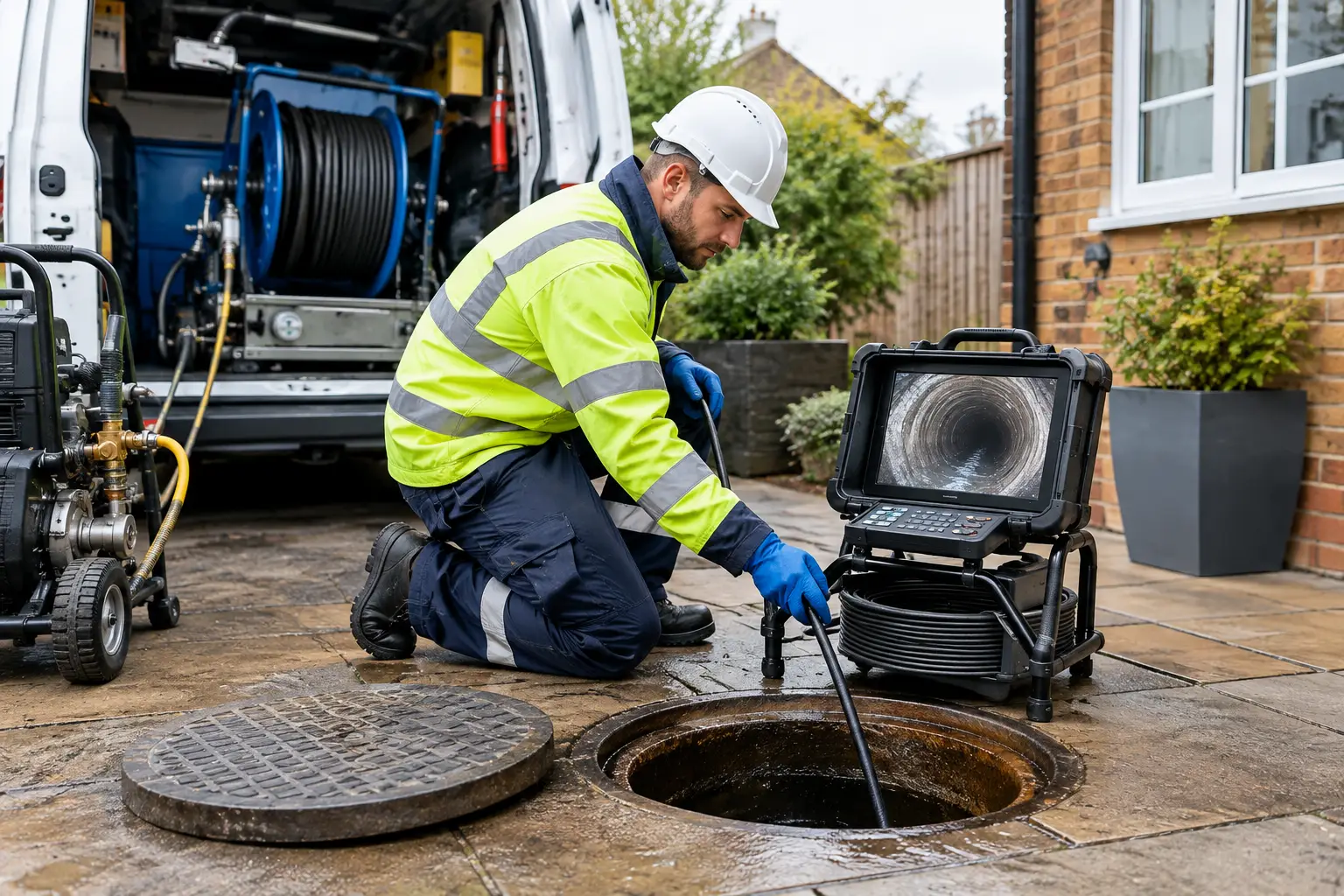
For larger or recurring problems, CCTV inspection provides useful evidence of the drain’s condition. It can identify cracks, displaced joints, root ingress and built-up deposits, helping a drainage professional recommend the right repair or cleaning method. This avoids guessing and makes it easier to target the cause rather than repeatedly treating the symptom.
What to do when a kitchen drain blocks
First, stop putting more water into the affected sink, appliance or floor drain. Continuing to run dishwashers, taps or cleaning water can force wastewater back into the kitchen. Remove any visible food debris from strainers only if it can be done safely, but avoid pushing tools or objects deep into the pipe.
Next, check whether the problem is limited to one fitting or affects multiple areas. This information helps establish whether the blockage is likely to be local or further along the drainage line. Note any smells, backing-up water or external gully overflow as well.
For a commercial kitchen that cannot operate normally, prompt professional drain clearance is the sensible next step. Drainage engineers can use appropriate equipment to clear blockages, clean pipework and, where needed, carry out CCTV inspection to identify damage or a recurring underlying fault. For food businesses across Greater London, fast action can help limit downtime and reduce the risk of wastewater spreading into work areas.
Protecting your premises after the blockage is cleared
A cleared drain should be followed by a practical review of why it blocked. If grease was the cause, look at collection methods and staff routines. If food waste is reaching the pipework, improve strainer checks and waste handling. If the issue returns despite good kitchen practice, arrange an investigation rather than accepting repeat call-outs as normal.
Keep a simple record of drainage incidents, including the affected area, likely cause and work completed. This is useful for facilities managers, landlords and kitchen operators, especially in shared or multi-tenant buildings where several parts of the property may connect to the same drainage system.
A well-run kitchen does not need to wait for a flooded floor or a closed service area before acting. At the first sign of slow drainage, smells or repeat blockages, deal with the cause early and give your team the best chance of keeping service moving safely.