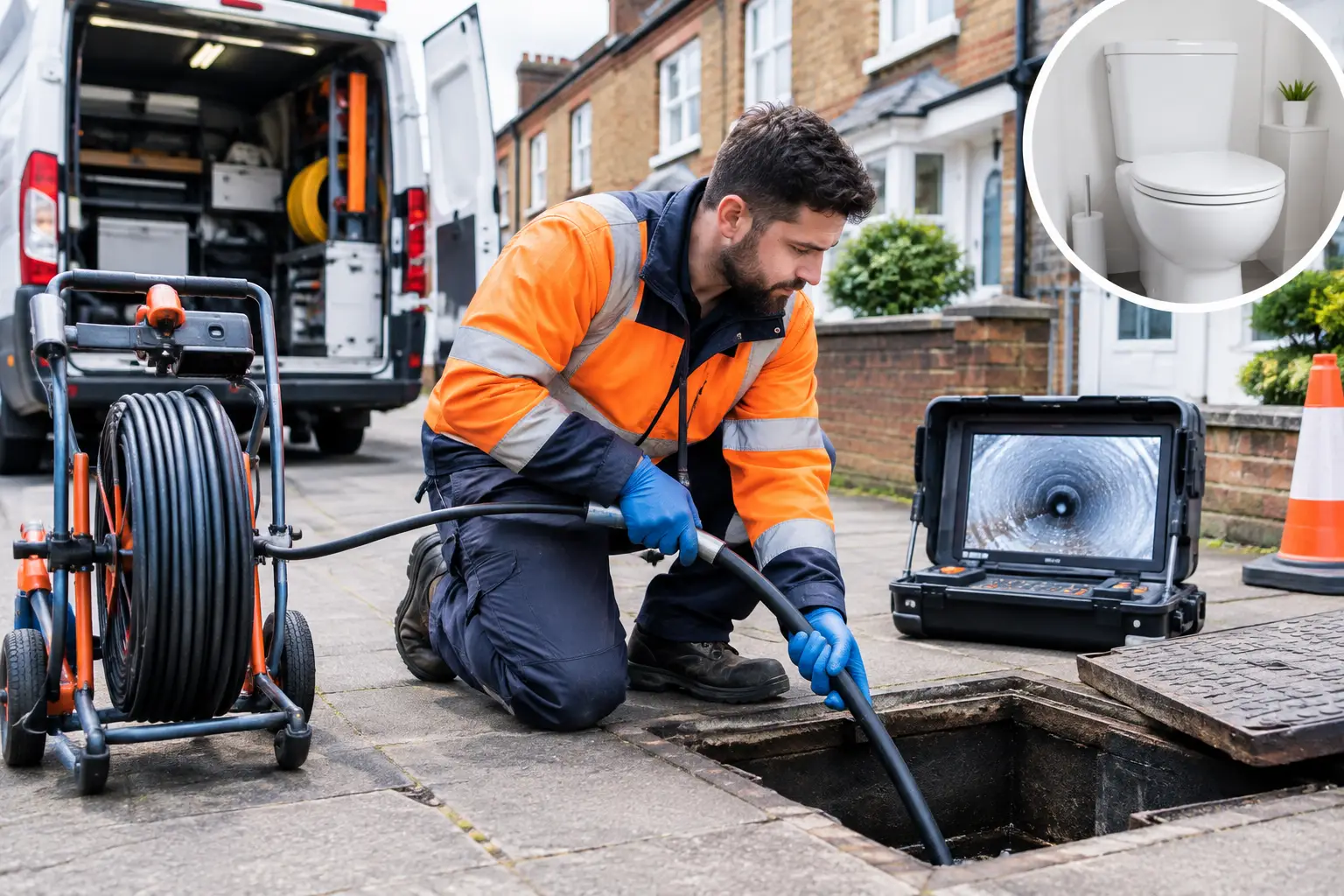
A blocked toilet in a customer washroom, standing water by a rear entrance or a kitchen drain backing up during service can bring normal trading to a stop quickly. A commercial drain maintenance contract London businesses can depend on gives you a planned way to reduce those risks, rather than waiting until a drainage issue becomes an emergency.
For facilities managers, landlords and business owners, maintenance is not simply about keeping pipes clean. It is about protecting staff, customers, tenants, stock and day-to-day operations. The right arrangement should be practical, clear about what is included and flexible enough to reflect how your premises actually use its drainage.
Why planned drain maintenance matters for commercial premises
Commercial drains often work harder than domestic systems. Restaurants and cafés may deal with fats, oils and food waste. Offices can experience problems in shared toilets and kitchen areas. Shops, schools, managed blocks and industrial premises may have external gullies, manholes and drains that collect leaves, silt, litter and surface water.
Small restrictions inside a pipe do not always cause an immediate blockage. Waste can gradually build up, water may begin to drain more slowly, and unpleasant odours can appear before a complete failure happens. Left unresolved, the result can be flooding, toilet closures, hygiene concerns and disruption for people using the building.
Planned visits allow developing problems to be spotted earlier. This is particularly useful for premises with busy public facilities, older drainage runs or a history of repeat blockages. It also means drainage work can often be arranged around quieter trading periods where appropriate, rather than being carried out under pressure after an overflow.
What a commercial drain maintenance contract in London should include
There is no single contract that suits every property. A small office with a staff kitchenette has different needs from a restaurant, a multi-let commercial building or a site with extensive external drainage. Before agreeing a schedule, the drainage system, previous issues and the type of waste entering the drains should be considered.
Initial inspection and a clear maintenance plan
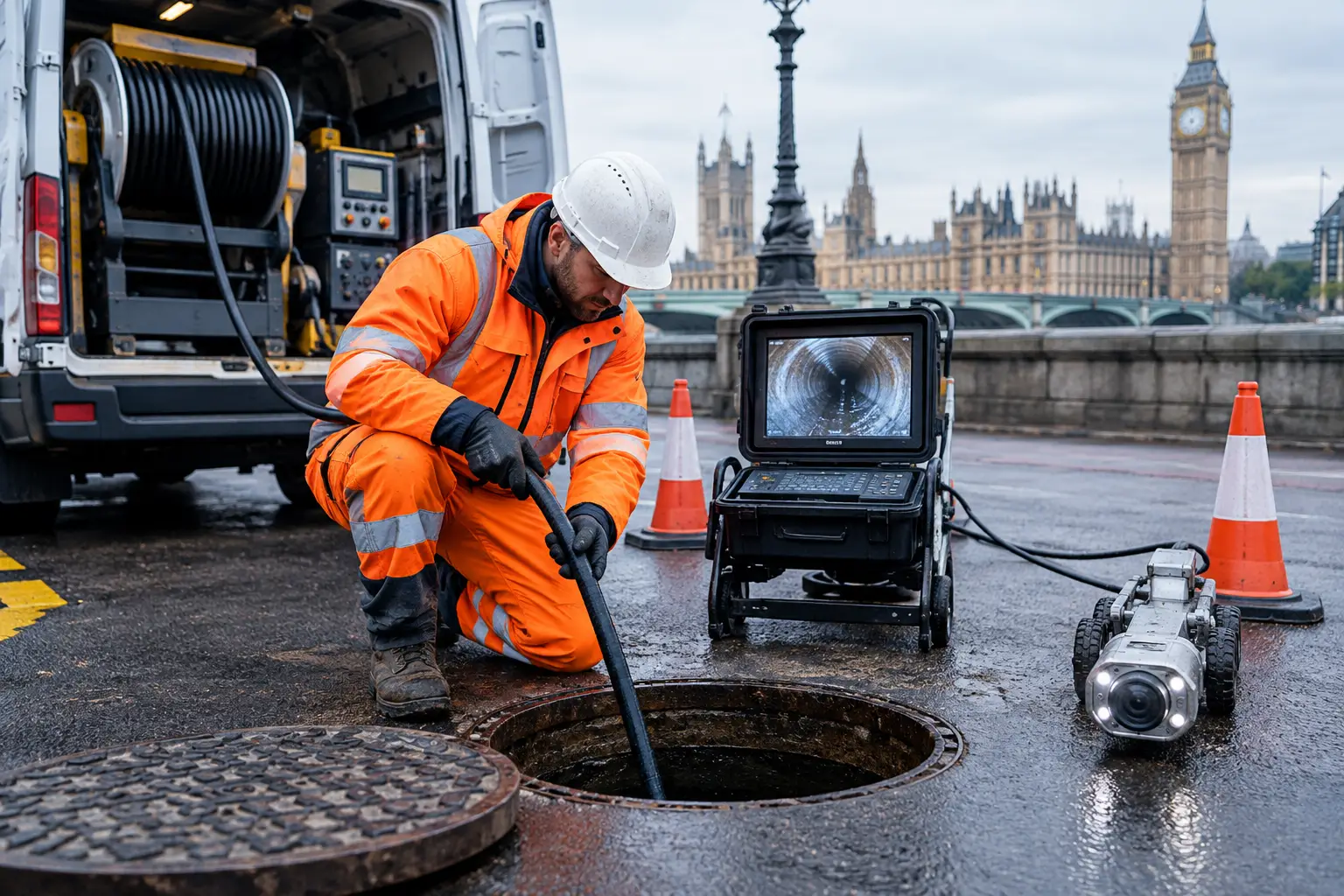
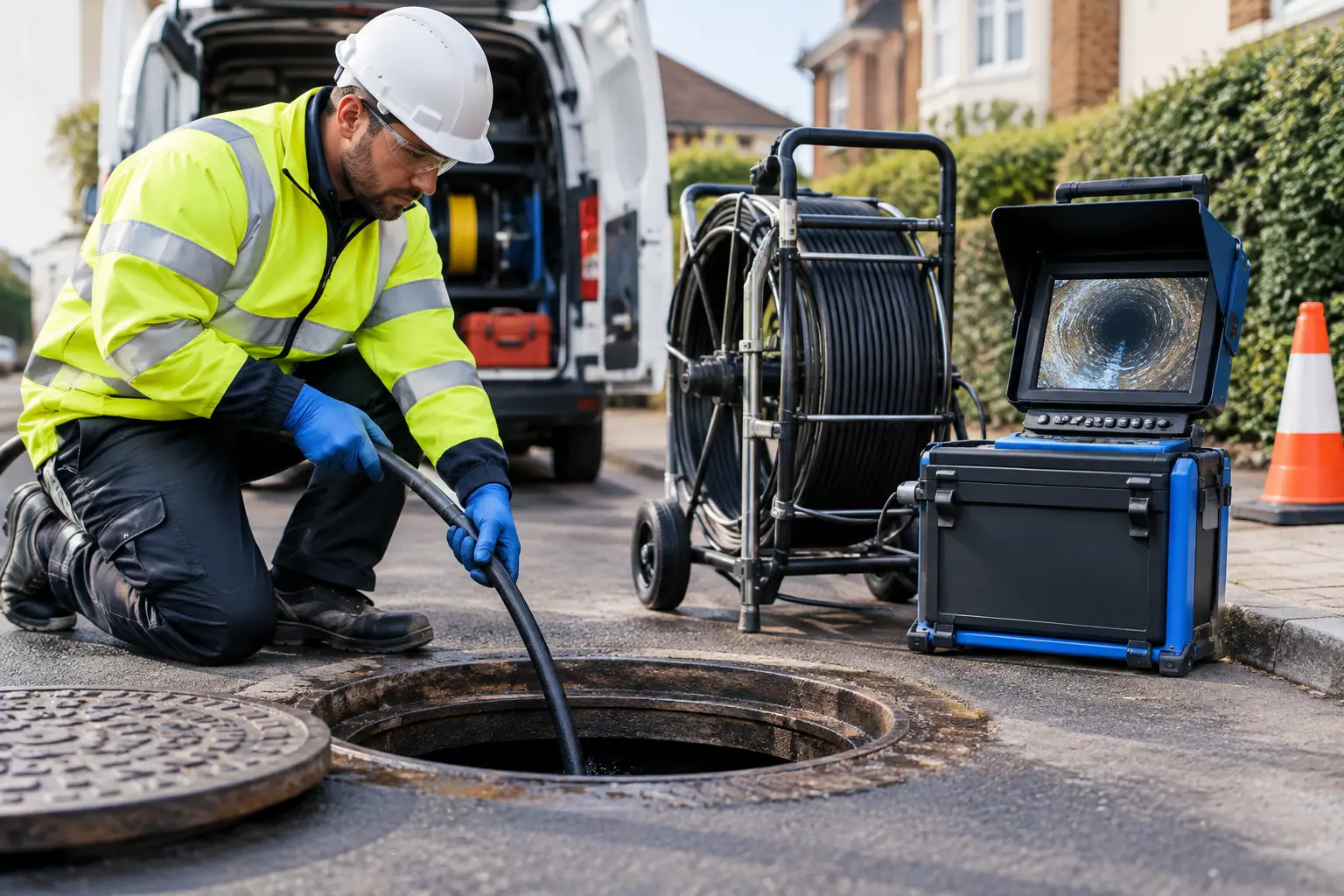
A useful starting point is an inspection of the areas that regularly cause concern. This may include internal kitchen drains, toilets, sinks, external gullies, manholes and accessible drainage runs. If recurring issues have not been explained, a CCTV drain survey can show what is happening underground.
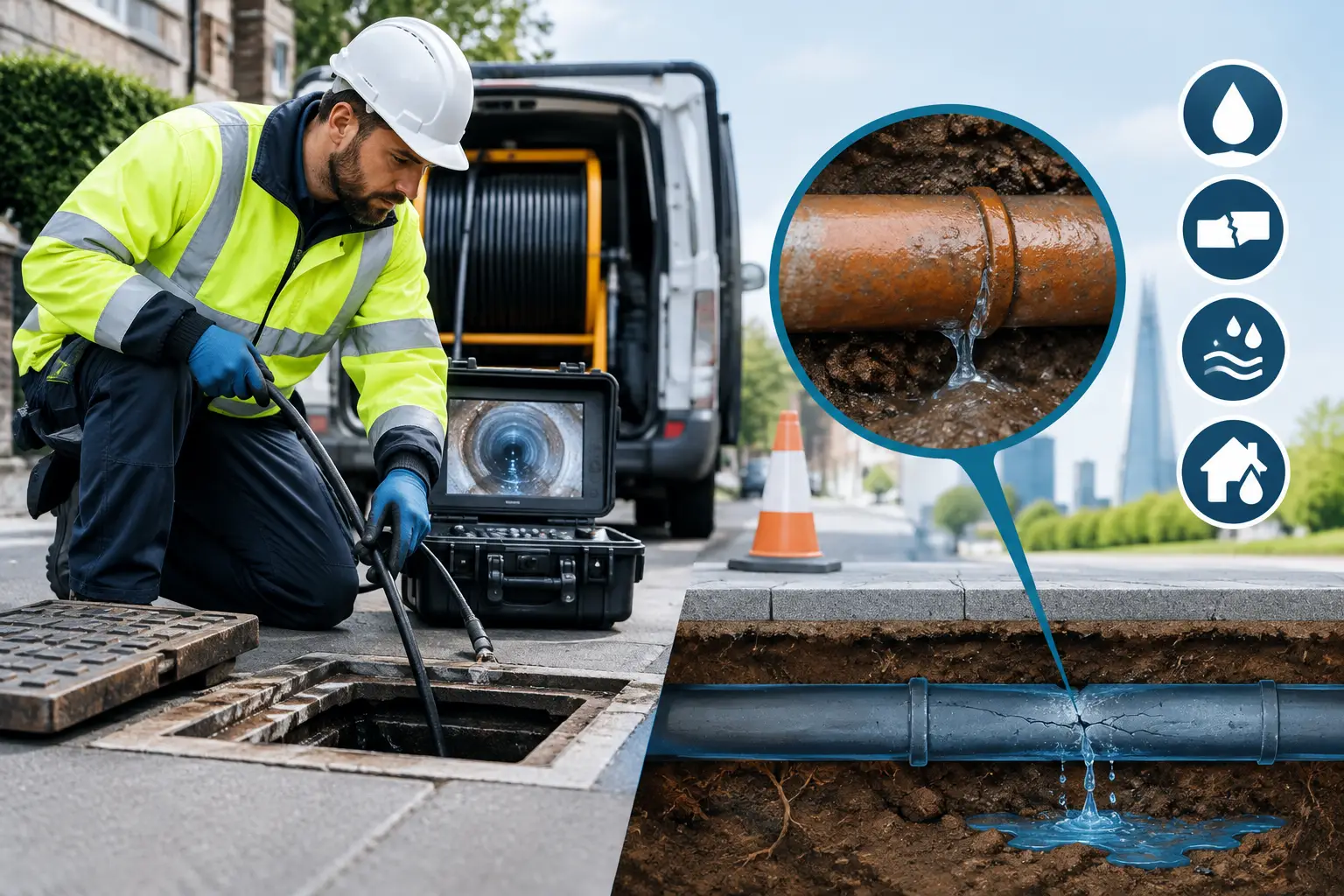
CCTV equipment can identify common causes such as compacted debris, grease build-up, root intrusion, cracks, displaced joints or damaged pipework. It is not needed for every routine visit, but it is valuable when a blockage keeps returning or when there are signs of a structural issue rather than a simple obstruction.
Following the inspection, the maintenance plan should set out which areas need attention and how often. A site with heavy kitchen use may need more regular cleaning than an office, while autumn leaf fall can influence the best schedule for external gullies.
Professional cleaning and clearance
Routine cleaning removes material before it has the chance to obstruct the system. Depending on the drain and the issue, this can involve professional high-pressure water jetting and drain clearance equipment. The aim is to restore proper flow while dealing with the cause of the restriction, not merely create a temporary opening through it.
For food-related businesses, keeping grease and food debris out of drainage is especially important. Staff practices matter as much as scheduled cleaning. Wiping plates and pans before washing, using suitable waste disposal methods and preventing cooking oil from entering sinks can all reduce the strain on kitchen drains between visits.
External drains need attention too. Gullies near loading areas, entrances and car parks can fill with leaves, mud and litter. If surface water has nowhere to go during heavy rain, it can pool around the building and create avoidable access and safety problems.
Reporting, advice and follow-up work
A contract should not leave the person responsible guessing what has been found. After maintenance work, clear communication helps you understand the condition of your drainage and whether any action is recommended.
This may be as straightforward as monitoring a particular line, changing the cleaning frequency or arranging further investigation. If a camera inspection reveals cracks, root ingress or another defect, the issue can be explained clearly so you can make an informed decision about repair work. Maintenance reduces the likelihood of emergencies, but it cannot prevent every fault, especially where older or damaged drains are involved.
Choosing the right visit frequency
The right frequency depends on use, not just building size. A retail unit with limited staff facilities may require periodic checks, while a busy hospitality venue could benefit from a more frequent schedule for kitchen drainage. Landlords and facilities managers with multiple units may also need planned maintenance of shared external drains and manholes.
Look at the warning signs from the last 12 months. Repeated call-outs, slow drainage, odours, gully overflows and reports from tenants are all useful evidence. Seasonal factors matter as well. Properties surrounded by trees may need external drainage checked before and during periods of heavy leaf fall.
It is sensible to review the plan after the first few visits. If drains remain clear and inspections show little build-up, the schedule may be adjusted. If debris returns faster than expected, a shorter interval and better on-site waste controls may be more cost-effective than repeated emergency clearance.
Questions to ask before agreeing a contract
A maintenance arrangement should give you clarity, not more administration. Ask what areas will be checked and cleaned, how the visit frequency has been chosen, and what happens if a fault is found. You should also establish how urgent drainage problems are handled outside planned visits and whether CCTV inspection is recommended for recurring issues.
It is worth discussing site access as well. Some manholes may be in customer areas, behind secure gates or within a shared service yard. Providing access details, relevant contact names and preferred working hours helps visits run smoothly. For tenants, a landlord or managing agent may need to approve access to shared drainage before work begins.
Transparent communication is particularly important if an issue could require repair rather than routine maintenance. The drainage contractor should explain what has been discovered, why it matters and the available next steps before non-emergency work is arranged.
Common problems a contract can help prevent
A planned maintenance programme cannot make a drainage system indestructible, but it can significantly reduce the chance of problems caused by gradual build-up and neglected external areas. The most common examples include blocked kitchen drains, overflowing gullies, toilet blockages in shared facilities and recurring foul smells from partially obstructed pipework.
It can also help uncover issues that are easy to miss from the surface. A drain may appear to clear after each call-out, yet continue to block because roots have entered through a joint or a section of pipe has been damaged. In that situation, repeated clearance alone is unlikely to be the long-term answer. CCTV investigation provides a clearer picture and helps avoid spending money on the same short-term fix again.
When an emergency call-out is still needed
Even well-maintained systems can experience sudden problems. A foreign object can block a toilet, heavy rainfall can overwhelm a gully or an existing defect can worsen unexpectedly. If sewage is backing up, water is flooding the premises, toilets are unusable or there is a strong foul smell, it is best to act promptly and keep people away from the affected area where possible.
RF Drainage Experts provides commercial drain clearance, CCTV drain inspection, maintenance and repair support across Greater London and nearby areas. For urgent issues, a fast professional assessment can help contain the immediate problem and identify whether follow-up work is needed.
A good maintenance contract should make drainage one less thing to worry about, while still giving you a clear route to help when the unexpected happens. Start with the areas that have caused disruption before, set a realistic schedule and make sure every visit leaves you with a clear understanding of your drains’ condition.